La Jetée (Chris Marker, 1962)
English Title: The Jetty
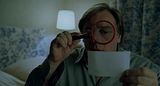
Memory is the thematic and aesthetic core of Chris Marker's masterpiece La Jetée (The Jetty). Set in the far future, during the aftermath of third World War, the film tells the story of a man haunted by a distinct memory from the past, a beautiful woman he has seen as a boy in the airport just before the eruption of the war. That memory makes him a unique and indispensable individual to the victors who in trying to connect with the past and the future to salvage the present from a scarcity of important resources, are experimenting on its prisoners who have concrete mnemonic images. This man's most persisting memory is represented by a still picture of a woman in a pleasantly feminine posture, her face beaming with comforting contentment, and her hair flowing peacefully with the wind. It is his last memory of peace.
It isn't highfalutin science fiction. Actually, La Jetée is simplistic in its science and entirely evasive of the details of time travel, but accurate in the atmosphere and the emotions of being confronted by a recurring image of the past. It is oddly romantic and fluently scary, especially in the way it belabors memory as a fathomable obsession and a manipulated resource. The plot's elliptical form only reinforces Marker's thematic quirk, the way the mysteries of time, of the human mind, and the human heart converge in a highly intimate tale of emotional longing.
La Jetée's aesthetic stance approximates a cinematically unconventional act of mnemonic recollection. While cinema has represented memories as elegant trips to the past through fluid flashbacks which are often granted the same clarity as the present, La Jetée takes a different course, visually experimental but still conventional in its storytelling methods. The film can accurately be described as a photo-montage, where black and white images are flawlessly stitched together. Guided by a narrator, the film takes the shape and feel of a storybook being told from start to finish.
Let not its unique form and style intimidate you. La Jetée showcases Marker as a filmmaker adept in the basics of filmmaking. The twenty nine-minute film is perhaps the most impressively edited film I've ever seen. The black and white stills magically move through the fades to black, the perfectly-timed cuts, and the transitions that are all the more made effective by pertinent yet bare sound effects and the memorably apt musical score. In one sequence, the man is first experimented upon by the victors. The rhythm of his heartbeat provides an unmitigated tension that fuels the ethereally ravishing photographs of the man suffering; his teeth sinking on the reed hammock which serves as his bed and his hands contorting in manifestly pained shapes.
There's a single moment in La Jetée wherein Marker decides to suddenly erupt from the confines of still memory, and allows one of his subjects to move, although very momentarily. It's intriguing because it is both startling yet magical, the way the girl awakes from slumber and truly awakes, blinking and smiling. It is as if the image has escaped from being merely encapsulated as a figment of memory but has become a part of the present, unlimited by the inadequacies of the human mind. But why did Marker choose that moment to break his unique style? It is perhaps it is only in that moment wherein the man has sufficiently let go of the memory, and believed it as a present emotion: of comfort and relief. In contrast, it is only in the museum where the animals of the past have been frozen for perpetuity did the man truly perfect the art of time travel (probably in acceptance that the past, like these frozen animals, need to be immobile for that is memory's most innate nature). That was exactly what the man's captors needed, a perpetuated memory not a fleeting emotion.
La Jetée is a film that is continually changing and evolving. It inhabits the very quality that makes photography a veritable art form, the way it captures a real moment in time for perpetuation and incessant interpretation. Similarly, La Jetée has the story of a man and his obsession with his memory of a girl waiting in the jetty made eternal. Yet beyond that story is Marker's art which plays differently every single time it is seen. The first time I saw it, it impressed me with how the narrative was perfectly told through mere photographs. The second time I saw it, I was left enchanted by its subtle tackling of the interconnections of time, memory, love, and obsession. The third time I saw it, I became fascinated by Marker’s fluency in his medium. Metaphorically put, La Jetée is as open as the clear skies that day when the image of the girl was engraved on the man's mind, and as tremendous and terrifying as the apocalypse that befell the world after it.


wm.jpg)