Showing posts with label 1963 Films. Show all posts

Tuesday, October 16, 2007

Blow Job (1963)


Blow Job (Andy Warhol, 1963)

Traditionally, the value of the close-up is for emphasis. As opposed to the long shot or the medium shot wherein the visual frame allows a greater area for both space and movement, the close-up is constricted and limited but the degree of detail is vaster. The most famous close-ups in our cinematic history take advantage of this unique value of the close-up. The subject matter of the close-up is most often the human face or a selected portion of it since the subtlest of emotions can be most accurately displayed by the minute movements of the mobile contours of the face. Done correctly, the close-up is an invaluable tool for filmmakers most especially to connect at a more intimate level to their proposed audiences.

This traditional use of the close-up is mutated and experimented with by Andy Warhol in his short film Blow Job. The film consists of several reels, all totaling to around 35 minutes of footage filmed from Warhol's 16-millimeter Bolex camera. The footage is a close-up of a young man supposedly receiving the titular sexual activity. Warhol's black and white visual frame is cramped: we see the man's head, a portion of his clothes, the background of The Factory's brick wall. His camera is immobile; the only invocation of human wit in this short film is Warhol's inspired brainstorming. Everything else is mechanical --- from the offscreen oral sex, its natural consequences to the subject receiver, the act of capturing the receiver's facial reactions through the wonders of the recording machine.

The close-up, from being a tool for emphasis, intimation and relation, turns into Warhol's method for oppression, as artist to his audience. The audience is subjected to the repetitive footage, witnessing the reaction but unable to actually partake of the act, or at least witness everything in long-shot entirety. The close-up strictly limits the edges of the cinematic canvass. The camera's immobility is almost suffocating. The only clue to what is happening, the short film's title, only increases our painful curiosity.

The close-up of the face, far from revealing the subtleties of human emotion, is used to manifest the blunt and the already obvious --- that of extreme pleasure and sexual satisfaction derivedfrom the sexual act. Instead of emphasis, Warhol utilizes the limitations of the close-up for sensual deprivation. The deprivation results in what some viewers consider is irresistably and near torturously sexy to downright frustrating. In my opinion, that sensory deprivation is actually very funny, an ingenious way of subversion by Warhol of the restrictive norms during that time by sacrificing the exact thing that makes supposed indecent cinema indecent, but retaining the heart and soul of the act.

The anecdote behind the film proves to be more telling than the film itself (you can cheat yourself of the frustrating yet rewarding experience by treating the story as the long shot that precedes the close-up, betraying Warhol's experimentation to the comforts of conventional cinema). DeVeron Bookwalter, the recipient of the blow job, wasn't the original choice to be the subject of the short film (neither was Willard Maas, Warhol's co-filmmaker who gave the blow job). The original choice was Charles Rydell, significant other of filmmaker Jerome Hill, who was lured into lending his face with five handsome young men giving fellatio. Rydell didn't take the offer seriously and never showed up in time for the shoot forcing Warhol to get Bookwalter, who was in The Factory at that time, to complete the picture.

Oppressive, playful but distinctly artful, Blow Job with its persistent close-up of Bookwalter's face is both mysterious and alarming. The depicted human quality is base and unspecial, yet it only mirrors something modern humanity has sought to hide for many decades --- our common and inherent ability for pleasure.

******
This post is my contribution to The House Next Door: Close-Up Blog-A-Thon.

Monday, October 30, 2006

The Insect Woman (1963)


The Insect Woman (Shohei Imamura, 1963)
Japanese Title: Nippon konchuki

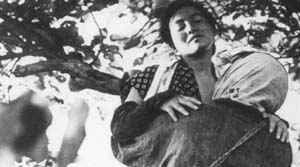
A beetle crawls through a patch of soil, climbing a minuscule hill with much effort. That is the central metaphor Shohei Imamura is going for with The Insect Woman for a woman who lives life through a Japanese society that is quickly changing into modernity. Imamura chronicles the life of Tome (Sachiko Hidari) starting from the moment of her birth. After the opening shots of the struggling beetle, Imamura opens the film proper with a woman similarly struggling through a snowy landscape to visit Tome's mother giving birth to her. Tome was born with questionable paternity (her mother is so loose that she has turned into a joke within the community), but despite that, Chuji (Kazuo Kitamura), her father in legal papers, has treated her with love and perhaps sexual affection. Imamura proficiently depicts the uncomfortable lines between sexual propriety and incest (curiously, it isn't clear if Chuji and Tome are indeed blood relatives, the same way Tome's daughter is not related by blood with Tome's lover in the future).

Tome starts working for a mill, but is called home to marry the third son of a poor landowner (still way above the class status of Tome's tenant family). Chuji disagrees but because of a previous loan of ten yen, Tome is forced to start working for the mill again, turning into a union leader romantically involved with one of the supervisors (who would break off the relationship when he ascends into a mangerial position). Her union activities lead to her retrenchment, forcing her to move to Tokyo and serve as a maid for Midori (Masumi Harukawa), a mistress of an American soldier. After an accident, Tome joins a religious sect wherein she meets inn-owner who seduces her to prostitution, and later on, to start pimping out women, herself.

Imamura tells the story in episodes. He ends an episode with a folksong being sung, tangentially related to the events that have ensued. If anything, The Insect Woman is a notable feature that depicts the struggles of a lowly woman to survive through the fastly changing times. The almost sudden change in setting amounts to confusion, which quickly fades as Imamura has a distinct understanding that his narrative comprises decades yet despite that, he doesn't rush into cramming everything in coarsely edited portions. Imamura immerses you into the situation. The raging sexual energies in pre-war feudal Japan where men quickly acknowledge sexual needs with the least of passions mostly populate the first few scenes. The women seem more like receptacles rather than human beings --- when Tome is giving birth and it is learned that her offspring is a female, a short debate of whether she has to be given up since she is another useless mouth to feed erupts. In other words, women are merely bargaining utilities to raise one's class level through marriage, and the chances for that are slim as the environment is filled with sex-crazed men who's never think twice in seduction.

Imamura delineates rural and urban, pre-war and post-war Japan. When Tome gets a taste of Tokyo, she never gets an opportunity to go back to her mountains (except when Chuji dies, but that visit led to her last downfall). In Tokyo, Tome's worth increases. Her line of business dictates that her womanhood has value, and the fact that she can send money to her family back home enunciates her distinction. Post-war Japan and the other historical events that ensue (Korean war, anti-government protests) has invited new ideas --- Midori turns from an American's witness to the wife of a Korean slacker, Tome is no longer restricted from using cunning and slyness in survival.

The ending of The Insect Woman is hauntingly similar to its opening sequence featuring the struggling beetle. Tome goes to visit her daughter in the farmland she is developing. Disgusted by the lack of development in rural Japan, Tome struggles through the soil, the rocks, and the pebbles that characterize the dirt road leading to the farm. She trips and her wooden slipper gets broken, and Imamura suddenly freezes the scene and ends his film. Interestingly, the idea that Imamura chronicles a life of a person from birth would somehow lead you to think that the chronicle would end with the person's death. Imamura seems to deny her character the benefit of death, the same way he gave that reward to Chuji's character, the sacrificing and doting patriarch who never truly adapts to society's changes. Like the insects and the roaches who an old saying says would inherit the world, Imamura seems to prophesy that the same goes for women like Tome, her daughter, and the countless others marginalized by culture and society