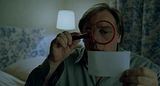
Armando Lao’s Ad Ignorantiam can be divided into three unequal parts. The first part, tediously shot real time, details one afternoon in a busy city intersection where a hapless victim (Ina Feleo) of snatching, and her friend (Kimmy Maclang) confusedly scour nearby nooks and alleyways for the snatcher. They end up accusing a man (Kristoffer King), who was at the wrong place in the wrong time, of the crime.
The second part, which serves to frame the first part within the structure of a court proceeding, displays an methodical and undramatic depiction of what happens inside courtrooms, where the frazzled characters, who are now litigants, of the first part are now joined by lawyers (Raquel Villavicencio and Allan Paule), a judge (Archie Adamos), and the overwrought procedure and decorum required in legal proceedings. The third part has a Supreme Court justice (Laurice Guillen) reciting the decision of the highest court on what seems to be an appeal from the decision of the court as depicted in the second part.
The three parts are arbitrarily weaved together, creating a disjointed narrative that attempts to expose the dangerous inadequacies of the Philippines’ criminal justice system. Lao experiments with moods and textures. The first part is shot enunciating the grit and agitation of the frenzied and stressed participants of that afternoon’s unfortunate incident. The second part is handled with marked sobriety in comparison to the first part’s lack of restraint. Its additional parties, the judge and the lawyers, are depicted with emotionless professionalism, remarkably removed from the litigants’ heightened vulnerability in the first part.
The last part is framed and shot with a hint of sarcasm and irreverence. The litigants have completely disappeared, replaced within a static frame by a mighty magistrate who is reciting her final judgment with an omnipotence that is oblivious to probable truths and personal plights. Lao treads a distance, beginning with the suffocating intimacy of the streets towards the callous and stoic resolve of so-called justice. It emphasizes how much of the humanity, of the compassion, of the truth has been lost to jargon and procedure as the criminal case is passed from one forum to another.
Lao’s experiment is intellectually stimulating, at best. Like a puzzle that takes extreme patience to solve, Ad Ignorantiam is more a chore than anything else. The rewards it promises are however inadequate. It is emotionally impoverished, lacking the anger or desperation to convert its noble goals from a mere artistic springboard into potent advocacy. It exists merely as an inert showcase of a third world inefficiency and its dramatic consequences. Despite the gravity of the issue it decides to tackle, it struggles to be pertinent because it busies itself with its style and technique, no matter how noxious they are to the senses, than actual substance.
Biyaheng Lupa (Armando Lao, 2009) English Title: Soliloquy
Other than Lav Diaz, whoseBatang West Side (West Side Avenue, 2001) has become a beacon of artistic integrity and independence in the midst of a failing mainstream cinema (its running length of 5 hours makes it a chore to watch for an audience who have been fed with Hollywood films and their local variations; its powerful themes make it even more difficult for an audience who have been trained to view cinema as a tool for escape), Armando Lao can arguably be referred as one of the figureheads of the current Philippine cinema. Understanding the budgetary limitations of filmmaking in the country (a lesson painfully learned while shooting Jeffrey Jeturian's Minsan Pa (One Moment More, 2004), which required more money the producer was not able to recover), he devised a screenwriting manual called "real-time" that allowed several filmmakers to make films from the use of available technology and very meager resources. Probably the most famous of these "real-time" practitioners is Brillante Mendoza whose Serbis (Service, 2008) and Kinatay (The Execution of P, 2009), both of which were written by Lao, competed in Cannes, the latter earning Mendoza a Best Director prize from the prestigious film festival. Other "real-time" directors include Jim Libiran (Tribu (2007)), Jeffrey Jeturian (Kubrador (The Bet Collector, 2005)), Francis Xavier Pasion (Jay (2008)) and Ralston Jover (Bakal Boys (Children Metal Divers, 2009) and writer of Mendoza's Manoro (The Teacher, 2006), Foster Child (2007) and Tirador (Slingshot, 2007)). Lao, however, is more than just a screenwriter as his scripts are written with directorial vision. Instead of merely constructing the narrative and characters and leaving the rest of the creative process to the director, Lao immerses into the entire filmmaking process, stamping each and every one of the films which he had a part in with auteurial integrity.
Biyaheng Lupa (Soliloquy) is the first film where Lao attaches his name as director. The conceit is fascinating: passengers of a bus en route from Manila to Legazpi City are exposed through their thoughts, magically vocalized whenever the door closes turning the bus into a space that is insulated from the rest of the world. Despite the liberties Lao made with reality, he maintains an accurate grasp of the process of bus travel: the noticeable eccentricities of each and every stranger you are forced to breathe the same enclosed air with, the momentary connections made through shared glances, baseless annoyances with each other and the isolated idle chatter, the torturous passing of empty time, and the occasional roadblocks like a sudden flat tire or an unavoidable checkpoint. This deliberate attention to detail that encompasses not only the tangible elements but also the mood of the milieu has always been a trait of all of Lao's filmed scripts. The vast gap between the poor and the middle class in Jeturian's Pila-balde (Fetch a Pail of Water, 1999), the underhanded exploitation of cinema in Jeturian's Tuhog (Larger Than Life, 2001), the transitory romances of the tourism industry in Minsan Pa, and the coinciding physical deterioration of a family-run movie theater and the moral depletion of the family running it in Serbis, these pervading concepts are adeptly translated into the screenplay, and eventually into the films, through the seemingly impertinent details and textures in the narrative that actually add more than color but thematic integrity to the filmed stories.
The conceit of immediately hearing the thoughts of the passengers of the Legazpi-bound bus is definitely fascinating. What starts out as merely an intriguing novelty transforms into an existential reference to the various characters, as their vocalized thoughts become the only vehicles for these characters to actually prevail in the world during that bus ride. Without the conceit, these passengers are completely deprived of a reason to exist within the narrative framework. It nearly feels like these characters are pleading to persist and matter in the world through Lao's graciousness to grant their hidden thoughts perpetuity through recorded sound. That even the deaf-mute character's thoughts partake the form of his voiceless means of communication; the fact that their thoughts are presented via the characters' own method of communication, complete with speech mannerisms and intonations, is a signifier that the aural manifestations of is much more than an ingenious writer's device but serves as the characters existence in the film. As their stories manifest through memories from the past and current contemplation, their histories and possible futures slowly unfold only to be abruptly terminated by the same conceit that gave them their existence.
The inevitable consequence of mounting a film that tells the stories of various characters who are only related to each other by circumstance is the inequity of quality or substance, which is of course, all a matter of taste. For example, for those who enjoy heavy-handed melodrama, the storyline of the deaf-mute (Carlo Guevarra) who escapes from his adoptive home to visit the grave of his real mother might prove to be emotionally resonant; I thought the character's storyline was superfluous and overextended. For those who require their stories spelled out in black and white, the storyline of the dissatisfied wife (Shamaine Buencamino) who takes her chances at a variety show only to end up with her fate unchanged might seem to have a difficultly ambiguous ending; I thought the scene where she alights from the bus, with all her thoughts suddenly silenced, and meets up with her husband, who she just mentally maligned, and walks home, with Lao's camera nervously lingering with the deafening silence, is one of the film's most powerful sequences. For those who are partial against preachy cinema, the vocalized thoughts of a retired court interpreter (Jose Almojuela) about the as he reaches his destination might be considered a distraction to the seamless flow of the film; I thought it was a moving juncture, one that is not only revelatory to one of the film's most guarded characters but also preparatory to the film's conclusion.
A concrete bridge, lighted and shot to maximize a sense of foreboding, breaks the comfort of formula. By film's end, we have become so accustomed to the cacophony of loud thoughts when the bus door closes and the unnerving silence when it opens that the phantasmagoric image of the bridge and the bus slowly entering the frame jars the film's staggered logic. The suddenness of the shift in aesthetic and mood allows for the unexpected termination of the remaining passengers' stories; the bus fell down a cliff, killing all of its passengers and consequently, all of their stories. It seems and probably is the easy way out for Lao's film, since the conceit has turned into a redundancy and therefore a liability, and the abundance of stories has resulted to predictability. Yet, it is also very understandable because Lao is after all, the writer, and as writer, he is god to the lives he chose to make stories out of, and just the same as the passengers who have alighted the bus and whose stories are no longer within the perspective of the film, everything must have an end. That is simply the nature of cinema. It is limited by the bounds of storytelling, and a good filmmaker, whether he is a writer, a director, or both, must make most of what exists within such bounds. With Biyaheng Lupa, Lao continues to prove to be a very good filmmaker.
2015 in TV
-
Bear with me on this. I love lists, and I used to do it A LOT. But the last
3 years or so, I got really really lazy with anything that has to do with
blogg...
Note 4: Nonface, Interlude, Lav Diaz and Time
-
*The face withheld - a secret.*
*1. *
*The Nonface in Class Picture1*
*[This article was published in Kino Punch (Issue 3), U.P. Cinema's Film
Critiqu...
SEARCH FOR WENG WENG: Week #2 update!
-
Dear friends and colleagues,
As you may have heard, I'm currently running a crowdfunding campaign to
finish my THE SEARCH FOR WENG WENG documentary -
...
Dead Kids (2019).
-
Dead Kids – Mikhael Red Mikhail Red’s Dead Kids (2019) is much like Lav
Diaz’s homage to juvenile exuberance and criminal mischief, Burger Boys
(1995), a c...
BUKOD KANG PINAGPALA (Sheron Dayoc, 2015)
-
He awakens her, a religious devotee, from a vegetative sleep, a
long-standing coma. He heals her of paralysis, festering bed sores and all,
and then so...
Dear Film Development Council of the Philippines
-
You have the mandate to start the National Film Archive. I have heard that
your first priority project in relation to archiving is the digitization of
some...
Digger (Alejandro Gonzalez Inarritu, 2026)
-
*Bigger*
*(WARNING: plot twists and story discussed in explicit detail!)*
*Digger* for Alejandro Gonzalez Inarritu is arguably his most expensive
produc...
The Last Post Ever About "Indie"
-
For the past decade, the so-called Independent scene has been mostly
dependent to financing bodies run by almost the same people who almost
serve the sam...
Breaking It to You Gently
-
Dear friends, It’s been a while. You have probably forgotten about this
blog. We have all moved on. We have carried on with the more important
aspects of o...
Done with Cinemalaya X
-
Break muna ako sa latest CinemalayaX scandal. This year has a superb
lineup, though I was only able to watch 11 films (the number does not
include all th...
DEVILS YOU KNOW
-
*Panahon Ng Halimaw*
*Directed and Written by Lav Diaz*
My Twitter feed regularly explodes with governmental disgruntlement.
Sometimes I weigh in, too...
Favorite Foreign Films of 2014
-
*Special Mention:*
The Tale of the Princess Kaguya, dir. Isao Takahata
20) The One I Love, dir. Charlie McDowell
19) Labor Day, dir. Jason Reitman
1...
FALSITY AND FAKERY
-
In Quark Henares' excellent drama, *Marupok AF* (Anima Studios, 2023),
EJ Jallorina plays Janzen Torres, a design student in Cebu nursing bruises
f...
Ha Ha Ha (South Korea, 2010)
-
Because last Saturday's drink up was strange. "Drinking down memory lane,"
a drunken text message, slurred across time (the flooding of memory) and
space ...
Ilang Tala sa mga Paborito Kong Short Film sa 2015
-
Paborito kong excuse ang “maling audience” kapag nanonood ako ng mga
experimental film sa Pinas. Gusto ko ang mga pelikulang pinapag-isip ako
pero hesit...
The Two Degrees of Weng Weng
-
*SIX DEGREES OF KEVIN BACON? PFFFFFT! WELCOME TO THE TWO DEGREES OF WENG
WENG*
Everyone - and I mean EVERYone - in the Philippine film industry is just
...
Not Another Manileño-Kids-Trooping-to-a-Party Video
-
Turn It Well Artist: Up Dharma Down Director: Caloy Soliongco Cast: Paul
Diaz, Dee Jae Paeste, Gino Jose, Martin Antunez, Haizel Fernando 2012 I
love Up Dh...
Snowpiercer (2013)
-
Ever wonder what it's like having the entire human race jammed in one
cramp, perpetually-running locomotive? Korean filmmaker Bong Joon-ho shows
how cra...
Crowdfunding 201: Best Friends Forever
-
*A long time ago, I wrote a column for Turnstyle News (a project of
yr.media) called "Crowdfunding 201" that aimed to dig deeper into what did
and did not ...
re:solve / 决议案 Trailer
-
There's a release date! And a new trailer to accompany the one month wait
to its debut. Touted as Singapore's first police crime thriller,
anticipation and...
28 Days Later | 4K Ultra HD Blu-ray Review
-
A lo-fi classic, **28 Days Later** looks and sounds its best yet—upscaled
4K Dolby Vision, cleaner encode, and Atmos all help. An unconventional but
worthw...
The Carpetbaggers
-
Edward Dmytryk - 1964 KL Studio Classics BD Region A There is an inspired
moment in The Carpetbaggers where the camera rests on the entry to a
bathroom in ...
Artist Spotlight: Gio Gio Art
-
I found this terrific illustration of San the Princess Mononoke at the
Reddit Ghibli thread. It was created by a person named "Gio Gio Art," who
also h...
"...all art is sex!"
-
Recently I watched *Savage Messiah*, which I'd never seen, and it got some
things ticking along in my head alongside some other things that relate to
the F...
Hidden Histories: The Story of Women Film Editors
-
*I've written an essay for Criterion on women film editors. It was inspired
by Su Friedrich's website, Edited By, a wonderful, invaluable labor of love
d...
Hell On Casco Bay
-
Five years since I updated this blog in any way (that festival blogroll to
the right freezes the COVID-19 cancellations in amber) and getting close to
si...
Sydney Film Festival 2014
-
*SYDNEY FILM FESTIVAL 2014*
As the programmer of the Sydney Film Festival Hub, I live in Town Hall
during the Festival, and don't get to see many films. Bu...
Been a Long Time
-
Five years later, a new post! Alas, it's just a quick note to say that,
while I no longer have time to maintain or update this blog, I'll be
keeping it onl...
Films seen on Sunday 18 October 2026
-
เราชอบ Zard และเพลง MAKENAIDE (1993) หรือ DON’T GIVE UP (อย่ายอมแพ้) มานาน
30 กว่าปีแล้ว แต่เมื่อกี้เราเพิ่งเข้าไปอ่านใน wikipedia แล้วเราถึงเพิ่งรู้ว่...
favorite films
-
Notes.
Bumped to the top of my blog for easy access.
20 films. Chronological. 1 film per director. I have given my top 5 special
pictures. I do plan to expa...
Cinephiles honored by Cinephiles!
-
Anyone who follows this blog will know that David and I have visited the
Cinematek in Brussels many times to watch movies and take frame
enlargements for o...
Inspector Bellamy
-
Claude Chabrol's final film, Inspector Bellamy, begins with a dedication
and ends with a quote, and in between is one of the French master's most
confoundi...
Mike's Murder
-
Debra Winger is a great actor that has had a good career when she should
have had a much better one. While she has certainly worked with some
impressi...
April 2015 Film Preview
-
Summer blockbuster season is just around the corner, but there's no need to
wait until then to see a great movie. April brings us a wide variety of
women-c...
Cinéphilo 2027 (Ollivier Pourriol)
-
Le Cinéphilo d’Ollivier Pourriol saison 2026-2027 (YouTube) 3'02"(Le Forum
des images) 9 ocotbre 2026"Le Cinéphilo, créé par Ollivier Pourriol en
2006, fê...
National Silent Movie Day: Manhandled (1924)
-
Wednesday, Sept. 29, 2021, is National Silent Movie Day. New York City's
beloved Film Forum is celebrating with a screening of Allan Dwan's 1924
silent...
SEAN BAKER'S (AND MIKEY MADISON'S) ANORA
-
Way back in May it was that Patty, Emma and I drove to the SEE Film
Multiplex in Bremerton to take in *I Saw the TV Glow*, and while there I
took a ...
Summer 2023 Blu-ray/4K Ultra Consumer Guide
-
Equipment: Sony UBP-X800 multi-region 4K player, Sony KD50X690E display,
Yamaha RXV-385 A/V receiver. Angel Face (Warner Archive Blu-ray) Of all the
amour ...
345-Word Reviews: Train to Busan
-
I’m an avowed Walking Dead quitter, numbed by repetitive gore, missing the
satirical bite and morbid world-building of the Romero “Dead” cycle. I’m
officia...
Remake, Remodel, Remarket
-
*Cinderella *(Clyde Geronimi, Wilfred Jackson, Hamilton Luske, 1950).
In the early 2000s, stores including Barneys and Hot Topic briefly stocked
saucy T-...
Demons (2026)
-
[The following text was published in Pardo, the official daily of the
Locarno Film Festival.] Since the Russian invasion in 2022, Ukrainian
representation ...
La Saveur de la Pastèque (Jean Douchet)
-
"La Saveur de la Pastèque" présenté par Jean Douchet (YouTube)
24'47"(CineClubJeanDouchet) 17 mai 2013Projection le mercredi 15 mai 2013
au Centre des art...
I gave FilmDoo a whirl
-
Finally, we can forget about DVDs. Streaming video is the future for
independent films from Thailand and other Southeast Asian countries, with
new onlin...