Triangle (Tsui Hark, Ringo Lam & Johnnie To, 2007)
Cantonese Title: Tie saam gok
The concept is to die for. Three of Hong Kong's best directors (Tsui Hark, prime mover of the Hong Kong new wave; Ringo Lam, whose City on Fire (1987) practically initiated the overrated career of Quentin Tarantino with his American version, Reservoir Dogs (1992); and Johnnie To, one of the most consistent and most exciting genre directors around) agree to make one feature film but unlike the usual triptychs (like Three (Kim Ji-woon, Nonzee Nimibutr, and Peter Chan, 2002), Three: Extremes (Park Chan-wook, Takashi Miike, and Fruit Chan, 2004) and Eros (Michaelangelo Antonioni, Steven Soderbergh and Wong Kar-wai, 2004)) where the helmers would create short films merely connected by a thematic or some other flimsier thread, the trio would make one continuous narrative laid down by Tsui, pumped up by Lam, and wrapped up by To.
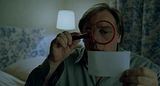
Aptly titled Triangle, the film starts off with three friends: blond-haired mama's boy and taxi driver Fai (Louis Koo), antiques dealer Mok (Sun Honglei), and nearly bankrupt husband Bo (Simon Yam) to an unfaithful psychotic wife Ling (Kelly Lin). The three, while discussing a possible heist that would instantly give them much-needed big bucks, is given a tip by a mysterious man of a treasure hidden inside the legislative building. The three head off to retrieve the treasure as the triad members they conned and the renegade cop (Lam Ka-tung), who is having an affair with Ling, hunt them down.
Despite all the contrivances, the inconsistencies, and the confusion, everything works. The film isn't divided into portions but it's quite obvious who directs which part. The frenetically edited first third of the film, where the characters are introduced and the basic conceit of the narrative is put into the table (quite delirious in the amount of information that is let out of the pandora's box), is obviously Tsui's doing (the same director of manic fantasy fests Zu: Warriors from the Magic Mountain (1983), its disappointing sequel Zu Warriors (2001), and Seven Swords (2005), and riveting actioner Time and Tide (2000)). The madness is then grounded by Lam, putting some teeth and psychology to Tsui's hard lucked protagonists, while setting up connections that would lead to To's grand finale, where the director merges his knack for comedy and his exquisite eye for bullet ballets in a near-operatic shootout in a grass and scarecrow covered field.
There's a consonant flow to the trio directors' predicated chaos. Each director is responsible for his segment in the film, with only the previous director's final output as guidance and cue for their part. Despite the freedom, the film didn't end up as a flagrant mess, which is not very surprising. Tsui, Lam and To, along with Hong Kong's other legendary directors (like John Woo, Wilson Yip, even Wong Kar-wai), have established the running themes, the prominent styles, and the basic narrative framework that define the former British colony's mainstream cinema. The three directors have decades of films and common experiences to make sure that Triangle falls within the borders of convention (and thus, render it commercially viable and extremely watchable). At most, it is To who takes the most risks, and comes out contributing the most to the narrative, without sacrificing his trademark quips. He basically uses every bit of conceit initiated by Tsui, incorporates the surfacing themes by Lam, and completes the picture with a surprising turn and a loud and flaunting bang, thus, turning Triangle into one memorable romp.
You'd think that with the differing productions (separated by months, depending on the actors' schedules) and directing styles, Triangle will end up as a merely entertaining experiment without any real depth to chew on. Actually, the film pretty much rehashes the well-entrenched theme of honor and loyalty in Hong Kong cinema. In the midst of the clinging temptations of a multimillion-dollar treasure, three men with varying motivations (the final goal is the big bucks but: Fai is trapped in the middle of various obligations from his dissonant relationships with the cops, the gangsters, and his two partners in crime; Bo is struggling with his wife's love affair with a cop dealt upon by his insolvency while reminiscing his abruptly ended marriage with his first wife; Mok is contemplating between his financial crisis and his precious moral stance) manage to overcome the hindrances and the odds that differentiate them, and retain or salvage what they value the most.
It also doesn't hurt that the oft-told parable, which the film really is, is overflowing with the three directors' distinct styles. Triangle leaves you throbbing and satisfied, hooked by the idiosyncratic small time would-be crooks Tsui introduces and weaves together, moved by the romantic dance inside an abandoned factory provided for by Lam's instinctive designs, and finally swept by hilariously extended switch-ups and the over-the-top moonlit gun play To gambled around with.