Time (Kim Ki-duk, 2006)
Korean Title: Shi gan
Kim Ki-duk's thirteenth film Time opens with a montage of nearly unwatchable footages of an ongoing plastic surgery. The face is literally mangled, punctured, and mashed; fat flows from the tubes that pass through the inanimate body. It is the same video that is shown to a distraught Seh-hee (Park Yi-geon) before she finally decided to commit to plastic surgery and changing her appearance permanently. The pre-credit sequence takes a form of a caution both to the eager plastic surgery customer and also to Kim's audience. The film, while serving a perfunctory role as a scathing commentary on Korea's fetishism with plastic surgery, suggests something deeper, something more universal.
It starts out like a parable with Ji-woo (Ha Jung-woo) and his girlfriend for two years Seh-hee. Seh-hee feels that Ji-woo is getting bored with her; to the point that she orders Ji-woo to think of another woman just to get him aroused enough to sleep with her. One day, Seh-hee disappears without telling Ji-woo. We know that she has opted to change her face, but in Ji-woo's mind, she just left her. Episodic sequences reveal to us Ji-woo's unsuccessful attempts to find love. A rather memorable attempt involves an unattractive lady Ji-woo hooks up with in a blind date; the end of the date is so poignantly conceived furthering Kim's angry accusations of the Korean male population's inability to see beauty within.
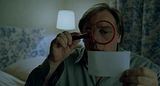
Ji-woo does manage to hook up with a new girl, See-hee (Seong Hyeon-a), the new waitress in his favorite coffee shop. His unresolved romance with Seh-hee pervades this new interest; and despite the fact that Seh-hee and See-hee are one and the same person, the sudden change in physical attributes allude to a difference in persona. This may come off as utterly fantastical, as plastic surgery can only change so much and it also invites factual inconsistencies such as lovers of two straight years would have something more to discern each other than mere hand sizes and former pictures. Yet, this is a Kim Ki-duk film and it is also widely recognizable that Kim expands reality the way he makes a man disappear in 3-Iron (2004), or an arrow fly high to the heavens in The Bow (2005), or the self-inflicted violence in The Isle (2000), or the hurtful misogynism in Bad Guy (2001). In Time, Kim suggests plastic surgery as more than just physical change; such modifies the human core that all that is left from the past life are mere symbols and signifiers.
However, Time feels very different from Kim's later films (beginning with Spring, Summer, Autumn, Winter... Spring (2003) to The Bow). It doesn't dabble in existentialist subtleties or Orientalist philosophies. The film is as blunt as a sledgehammer and is as obvious as your favorite fairy tale. It takes its cautionary tale to excessive lengths, that it hurts Kim's more elusive attempts to say something deeper. I'm one of those who has an affinity with Kim's more silent features. There's always a sense that Kim's attempt to go back to his pre-Spring, Summer, Autumn, Winter... Spring ouvre can't really be definitely distinguished from the artist he has become. Time stands midway being dragged by Kim's opposite goals of provocation and meditation.
There were sequences which I thought were utterly sublime and consistent with Kim's ability to expand the natural dimensions of reality to propose something poetic --- Ji-woo and Seh-hee's lovemaking scene near the beginning where the latter forced the former to think of another girl (it's as painfully emotional to see lovemaking delegated as mere satisfaction); the breathtaking scenes in the sculpture park (the magnificent statues depict time in its most destructive and rejuvinating way, with the tide burying most of the statues in seawater only to reappear new yet the same --- as opposed to the characters' will to stop time by completely modifying their physical attributes); See-hee's desperate attempts to search for Ji-woo (the Cinderella twist to the runaway lover as the crystal shoe is replaced by the perfect hand).
However, all the episodes I liked are drowned by the inconsistent sentimentality and questionable resulting decisions by the main characters (and Kim): the sudden decision for what seems to be a pay-back by Ji-woo (he begs the plastic surgeon to take over his mental faculties and decide for him); the questionable inability for confrontation (it seems that love is as facile as their physical modifications, thus turning their relationship into a hide and seek game); and the overachieving conclusion that unsuccessfully suggests the continuum of the misfortunes from these neverending adventures to the plastic surgeon.