Showing posts with label Sweden. Show all posts

Thursday, February 17, 2011

It Rains on Our Love (1946)


You and Me Against the World
by Francis Joseph A. Cruz

They meet by chance in a train station. Maggi (Barbro Kollberg) is a woman who wishes to go home upon learning that she is pregnant with the child of a man she does not know. David (Birger Malmsten), without a penny to his name, has just been released from prison. After spending a night together in a hotel room, they fall in love and vow to build their future together. The two end up breaking into a cottage, leading to a series of events that will test their love.

Slandered, suspected of theft and swindled, the couple insist on starting their new life together in a rural community that obviously does not want them and their scandalous relationship in its midst. Thus, the couple’s attempt to legitimise their love through the formality of marriage is hindered by moral and bureaucratic mechanisms that are at play. Their dreams of getting their own home are spoiled by their greedy landlord’s dastardly manoeuvrings.

Only Ingmar Bergman’s second film, It Rains on Our Love (1946), screening as part of the Berlinale Retrospective of the famed Swedish master, showcases a director who has the gift for both storytelling and characterisation. Humour plays a vital part in the film, providing much-needed levity in a story that mines the misfortunes of a couple trying to exist in a village that thrives in narrow-mindedness. The film plays very much like an amiable Hollywood melodrama, something that might surprise Bergman enthusiasts who have gotten used to the harsh ascetic of films like Cries and Whispers (1972) and Scenes from a Marriage (1973).

It Rains on Our Love may not have the complexity and gravity that is usually associated with Bergman. What it does have is an optimism that, at first, might seem strange and out-of-place. But in reality, it is very much a part of the human condition that Bergman has tirelessly worked to portray in his cinema.

In a filmography that includes great films like Fanny and Alexander (1982), Persona (1966) and The Seventh Seal (1957), minor works like It Rains on Our Love are easily forgotten. Thankfully, retrospectives that not only concentrate on widely-accepted masterpieces but also on lesser-known gems, give us a chance to rediscover these films, and for them to reach audiences that may welcome them with new eyes.

(First published here. Read more in the Berlinale Talent Press website)

Saturday, October 20, 2007

Fanny and Alexander (1982)


Fanny and Alexander (Ingmar Bergman, 1982)
Swedish Title: Fanny Och Alexander

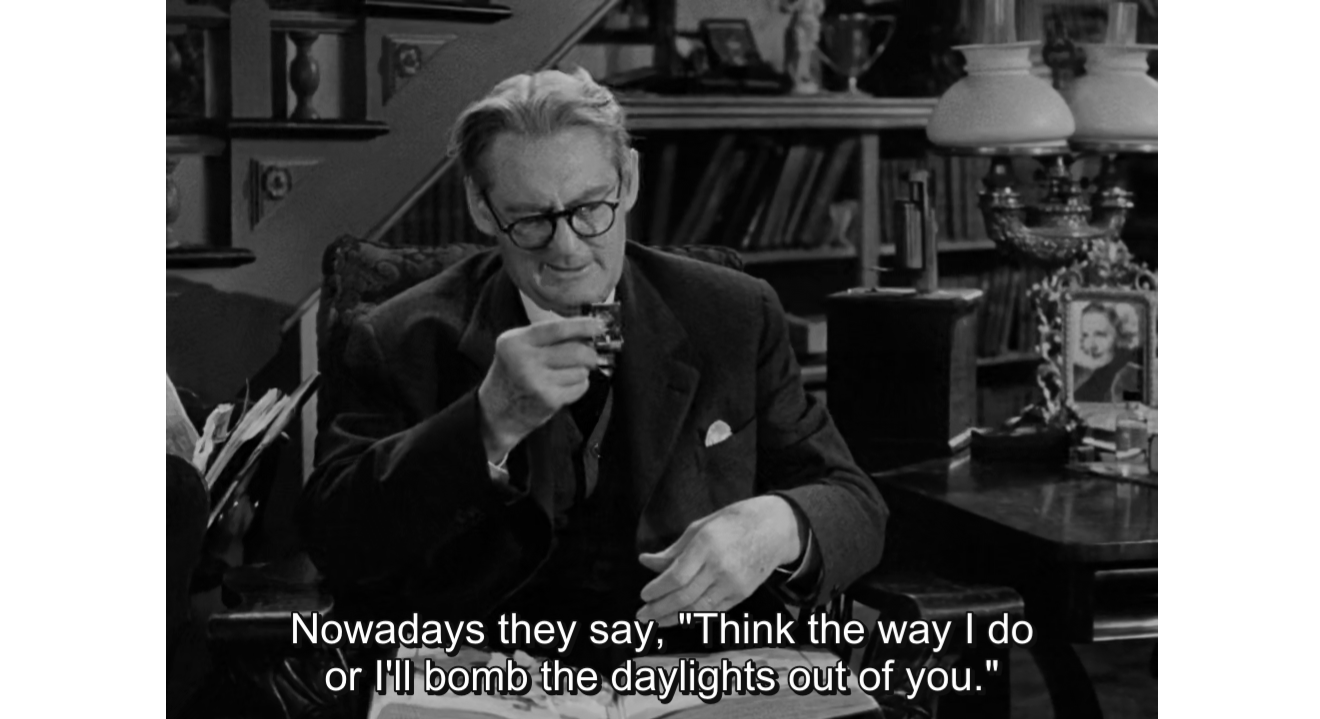
I just sat there trembling. Fanny and Alexander, the 188-minute edit Ingmar Bergman reluctantly made for theatrical screening, just ended. The credits were rolling but that final shot of young Alexander (wide-eyed Bertil Guve) finding refuge on the lap of his grandmother Helena (a magnificent Gunn Wållgren), along with other mesmerizing images that miraculously fleeted with their uncanny burdensome implications stuck with me, paralyzing my limbs temporarily.

Most cinephiles would call Fanny and Alexander as Bergman's most accessible work, the advisable first Bergman film to watch if you're planning to succumb to the Swedish director's mostly desolate filmography. My first Bergman film is Cries and Whispers (1972), a tantalizing and palpably painful work which shattered all trace of happiness in my body during the hour and a half I spent watching it. That film moved me, but not as much as how Fanny and Alexander did, which not only rattled my existential core but also delighted, frightened, and amused me in a way that was not shallow and ephemeral.

A flock of older women was not so quietly discussing the overt cruelty in the film. It was obvious that they related closely to the trials Alexander and her younger sister Fanny (Pernilla Allwin) had to go through, especially after the death of their father Oscar (Allan Edwall), seemingly the only sensible man in the Ekdahl household. Indeed, I find Bergman discomfortingly cruel to his younger protagonists (Alexander serves as Bergman's alter ego in this film and both him and the character share similar experiences) but not because of the extraneous experiences they have to undergo, but because of their (more specifically Alexander) sudden realization of the bleakness of life and the probable futility of the afterlife.

Alexander is often haunted by his father's ghost, who often just stands with forlorn gazes, inutile and useless in the afterlife. In his conversation with his dead father in the puppet room of Isak (Erland Josephson), a Jew and very close companion of the Ekdahl matriarch, Alexander questions his father's inactivity and the reason why he is not with God, before starting to angrily challenge God's existence and nobility. God replies by instilling fear, rattling a cabinet and threatening to show all his terrifying majesty and glory to the young boy. Of course, there is no God; it was just a well-crafted puppet made by Isak's playful nephew Aron (Mats Bergman). The bigger picture is laid down for us, that in life, we are governed by a religion that promotes self-denial, pain, punishment, sacrifice, and fear as a way of life only to be utterly dismayed and disappointed in death, where one's ghost is left roaming unnoticed and hopeless within the halls of his former life. It is that uncertainty that really scares us. There is covetable solemnity in the mummy's restful stance, eternally breathing and blissfully ignorant of the presumable emptiness of death.

Bergman weaves a colorful tapestry of life through the Ekdahl clan, a family entrenched in the local theater. Their mansion, we first see through abandoned in a hallucinatory daydream of imaginative Alexander (a memorable opening, tremendously horrifying in its opulent sparseness), becomes alive for Christmas Eve dinner. Underneath the routine yearly celebration are apprehensions, voiced out only in the privacy of their chambers --- a sexual affair between Gustav Adolf (Jarl Kulle) and a pretty maid (Pernilla Wallgren) matures into a suffocating relationship that confuses financial freedom with actual freedom; Gustav's brother Carl (Börje Ahlstedt) is on the edge of frustration over his financial reverses and the servile predisposition of his foreigner wife; Helena recounts the exploits of her youth to Isak, while the latter doesn't regret the depletion of their youth as the world is getting worse, there's no better time to die.

Despite the normal intrigues of the household, there's much vitality within the mansion as compared to the abstinent life forcefully fed to Alexander and Fanny in the household of their stepfather (Jan Malmsjö), a bishop who woos their mother Emilie (Ewa Fröling) into marriage. The walls are drab, the servants are colorless and treacherous, the residents are cruel. The ascetic and self-flagellating lifestyle led has tortured these people to utter disfigurement (an obese aunt in her deathbed, a tormented sister, a stern and domineering mother); there is blatant abomination in this example of misconstrued piety and purity. Alexander turns into his imagination for comfort and defense (he and his sister have been abandoned and helpless, their father is a mere watcher and a lonesome presence, their mother is trapped in her own passions, and God seems to be on the side of the righteous bishop), inconsequentially sinning to an indifferent deity who may or may not exist.

Fanny and Alexander is supposed to be Ingmar Bergman's final film (his final film turned out to be Saraband (2003), released four years prior to his death). It certainly feels like a grandiose summation of his life's work --- perfectly beautiful (lensed by legendary cinematographer and frequent collaborator Sven Nykvist), mysterious and magical, awing and hypnotizing, cruel, tragic, and fatal, but still a biblical celebration of life and of the living, their many facets and denominations.

Wednesday, October 18, 2006

Show Me Love (1998)


Show Me Love (Lukas Moodysson, 1998)
Swedish Title: Fucking Åmål

The original title of the film is "Fucking Åmål," referring to the overall attitude one of the characters have for her small hometown. Elin (Alexandra Dahlström) is Åmål's prettiest sixteen year old girl. She's shallow and rumors conceive her as a loose girl, which isn't exactly false. While she's still a virgin, she flirts and makes out with almost everyone while complaining how boring it is to live in her small burg (she whines about how everything is late in her town, that the "in" things are already "out" when they arrive in her town, referring to rave parties). Agnes (Rebecka Liljeberg) has lived in the town for two years but hasn't exactly made enough friends On her birthday, her mom decides to put up a party for which she disagrees to, embarrassed by the fact that no one will be coming. Agnes is lesbian, and is in love with pretty Elin.

Bored and without nothing new to do, Elin and her sister decides to just go to Agnes' party. Elin's sister dares Elin to give Agnes a kiss for twenty crowns. She agrees, but then, she subsequently retreats and instead, leaves the melancholic party to hang out with the popular kids in town. After a while, she returns to Agnes and the two dare each other to hitch a ride to Stockholm. Inside the car, as the radio plays the song "I Wanna Know What Love Is," the two continue the kiss Elin suddenly terminated during the party. The two have fallen in love, but is now faced by the stigma that attaches to lesbian relationships.

Show Me Love is Swedish director Lukas Moodysson's first feature film. It's quite remarkably well-made. Moodysson, despite the frequent amateurish techniques (sloppy close-ups, incongruent camera movements), possesses an immaculate detailing of the small-town teenage issues and a loving understanding on the dilemma that falls upon the two characters. Moodysson might be a little more affectionate towards the pathetic Agnes, who spends her time writing secret notes in her personal computer and hanging out with an also-friendless girl who is reduced to her wheelchair and disabled basketball matches. Elin is portrayed as the sexual gravitational center of the small town --- attracting the timid nice guy Johan (Mathias Rust) to admire her and subsequently court her. Elin's reaction is less than admirable, using Johan as a cover for her secret homosexual longings. Moodysson's portrayal of Elin is problematic turning her turn-around a bit surprising and unrealistic, despite its beautifully emotional heftiness.

Show Me Love remains to be Moodysson's most sincere film (although I haven't seen Together (2000)). Here, he isn't faced with pressing issues such as white slavery in his highly acclaimed Lilya 4-Ever (2002). He isn't belittled by the shocking imagery of A Hole in My Heart (2004; although there are painful sequences here such as Agnes's suicidal attempts), or experimentations as in his latest, Container (2006). Moodysson concentrates primarily on the compelling development of teenage romances, which probably resulted from the rebellious trait that springs forth from the absolute boredom and predictability of their sleepy little town. Also, Moodysson is at his most emotionally convincing self here. His use of songs, his on-the-point visuals, his relative ease in bringing out excellent performances from the young cast, culminates in those gorgeous moments wherein the characters are faced with seemingly petty dilemmas, but to them, would mean the world. With Show Me Love, Moodysson seems to have achieved the difficult --- he has expanded small-town teenage conflicts and angst into a pressing and emotionally rich tale of romance against all odds.

Friday, October 13, 2006

Container (2006)


Container (Lukas Moodysson, 2006)

After Lukas Moodysson's rather pretentious and critically panned last feature A Hole in the Heart (2004) which focuses mainly on four characters, centering on the introverted teenage central character who observes his father making home-grown pornographic videos, one would expect for Moodysson to follow it up with something more akin to his first three features which offer narratively conventional yet rewarding cinematic experiences. Instead, Moodysson comes up with Container, which seems to be even more dense and pretentious than A Hole in the Heart. Shot in low-grade black and white video, haphazardly edited into a nebulous string of unconnected images ranging from the utterly banal to surprisingly striking, Container looks and feels like the work of a film student rather than an internationally known director. It's more similar to Jonathan Caouette's Tarnation (2003), a cinematic autobiography which features personal home videos and pictures of the director edited together to form a coherent and very introspective look at his homosexual life. Yet Container is not personal at all, unlike Caouette's Tarnation. Container distances its viewer by separating the visual and aural values creating an air of discordant and jarring experience that is devoid of any emotional impact, aside from stereotypical depression.

The visual component of the film features one central character --- an overweight man (Peter Lorentzon) who is seen prancing around, donning women's clothes and performing some other acts that suggest some emotional or mental disturbance. Another character features --- a petite Asian girl (Mariha Åberg) who is shown as the overweight man's inner self. The two are infrequently shown together except on a couple of situations --- when the man is carrying the girl, or when the girl is tending to the man. Aside from those situations, the two are filmed separately, sometimes in similar situations, suggesting the identity of the two characters. The scenes where they are shown together suggest the relationship of the outward and the inward personalities --- that the outward character is forced to carry the inward character as a burden, but in return the inward character tends and takes care of the troubled outward character. The visual component is an accurate conveyance of what a transgender individual might feel, and despite the amateurish production, the visual component is quite effective in its portrayal.

More important and resonating than the visual component is the aural component. The voice is supplied by American actress Jena Malone (who is also one of the actresses the character pretends himself to be). She speaks in hushed whispers, as if speaking from a covered closet. Malone speaks of many things --- of her experiences as a trans gender, how she hates homosexuals and differentiates herself from that, how she collects things and buys junk from Ebay, her idols ranging from Savannah, a classic suicidal porno actress to Britney Spears. The voice is quite updated on celebrity news. There's a frequent appearance of anecdotes regarding Brad Pitt and Jennifer Aniston's break-up, Paris Hilton, Tom Cruise and Katie Holmes, which transform into social and pseudo-philosophical commentaries and introspective intimate discussions about her own experiences.

The visual and aural components do not match up, but almost magically, Moodysson is able to give resonance to both components when experienced together. I don't think the visual component will work without the voice, but the voice, in particular, is added a certain value when coupled with the black and white images that are shown. Sure, it's undeniably pretentious and the only reason it might have a wider audience than its similar student-made counterparts, is because Moodysson attaches his name to it. However, Container has a certain compelling quality that just simply can't be dismissed. It's nothing like Tarnation, which is both accurate, intricate, and intimate. Container is more interested in detailing the sickness and the depravities of our modern society by showing the incongruent personal and fictionalized experiences of a trans gender individual. Moodysson attaches footages of a desolated building in Chernobyl and its surrounding areas, including several point-outs to the tragedies that have struck the world (the Iraqi War, the Chernobyl fallout, a kid dying while playing soccer, Kylie Minogue's breast cancer), to connect and juxtapose the desolated interiors of the troubled trans gender individual with the confusion that surround present and modern living.