Showing posts with label 2005 Films. Show all posts

Sunday, April 12, 2009

Big Time (2005)


Big Time (Mario Cornejo, 2005)

Danny (Winston Elizalde) and Jonas (Nor Domingo) are petty crooks whose idea of going big-time is kidnapping the only daughter of a middle-class couple for a ransom price of 50,000 pesos, which is roughly a thousand American dollars. Before even fully realizing that their kidnapping plan is not very different from the dozen little felonies they have committed through the years (the most memorable of which is their dog-napping escapade, foiled by the mutt's incessant barking), they are involuntarily pushed into shady affairs far larger than what they have imagined. Melody (Joanne Miller), the duo's target whose recurring daydreams involve her ambitions of being a famous celebrity, turns out to be the girlfriend of Wilson (Jamie Wilson), the underachieving son of mob boss Don Manolo (Michael De Mesa). Wilson sees the awkward situation as an opportunity to double-cross his father by staging his own kidnapping, using Danny, Jonas, and his starry eyed girlfriend as props in his attempt to raise enough capital to fund his proposed illegal drugs business.

Mario Cornejo's Big Time, written by Cornejo with Monster Jimenez, is easy to enjoy, blanketing its genre affiliations with its extraordinary grasp of pop culture. The film's vocabulary, composed of references to mass culture, both past and present, is used to communicate its effective brand of humor, dark yet wildly efficient, and the aptly limited scope of emotions that it utilizes (Danny thinks that Melody looks like popular actress Kristine Hermosa; and in one scene, subtly declares affection to Melody by choosing Hermosa over another celebrity in an impromptu preferences game). In truth, Big Time is deliriously morbid in its processes and notwithstanding its reliance on fantabulous narrative twists and turns, penultimately realist in its philosophies. Its narrative, despite the distractions provided for by the screenplay's reliable internal wit, actually zeroes in on a pressing social issue that is supposed to be meant to be taken seriously, but the filmmakers decide to enunciate using genre conventions and black humor.

Cornejo and Jimenez, in pitting two small-time crooks with the complications of big time criminality, reflects on the absurd situation of Philippine society, where the gap between rich and poor is undeniable in its extent, where it is not only social status or financial capability that separate them but also their needs, wants, and cultures. In Big Time, Danny and Jonas' sudden involvement in Wilson's scheme awakens them into a realization of their insignificance in the larger world, that their felonies are trivial if compared to the convolutions of organized crime, and that because of their pitiful place in the criminal world, they become nothing more than voiceless subordinates in Wilson's strategies. Even Melody's ambition of achieving stardom, an ambition that both humorously and poignantly consumes her very existence, is negligible in the midst of Wilson's immediate plans of siphoning money from his father through the sham kidnap-for-ransom ploy he concocted. The idle time conversations are written (and the pop references are selected; Wilson prefers to refer to Francis Ford Coppola's The Godfather trilogy, while Danny limits his references to local entertainment) and staged to flesh out the cultural ignorance and lack of sophistication or finesse inflicted by Danny and Jonas' small time status.

Big Time, with all its overt silliness and glaring implausibility, is tons of fun. It takes cognizance of the overwhelmingly real injustice that attaches to Filipino society without employing shock tactics or drowning its artistry with revolts or laments. Instead, it dwells on the absurdity of the societal situation of big dreams, quick fixes and unfathomable repercussions. The film reaches its bloody climax outside the abandoned Film Center of the Philippines (an artifact of a building that was created to serve as nucleus of the country's film industry, but has then been converted into a haven for amorous lovers, drug addicts, and ghost searchers; the setting of the final showdown in the Film Center can be read either as a criticism against the expensive government rendered useless both by Marcos-era lavishness and negligence, or simply put, or a slogan against a dying, if not totally dead, Philippine cinema as represented by the building, only to be given life by the sudden influx of new work by young filmmakers), where double-crossings, broken promises, and revelations erupt into a survivor-less bloodbath.

The film provides no real resolution for its pitiful small-time protagonists and no satisfying comeuppance for its shady big-time villains. Except for Jonas, whose reward is survival and whose punishment is insignificance in a sea populated by small-time persons like him and dominated by only a few. In the end, he works as a janitor and like the rest of the country, struggles to survive as one of the nameless and faceless in the streets of Manila. There is bittersweet comfort for a man to know his place and be satisfied, lest he plunges himself once again in a world that is too complicated and too big for his severely wounded ambitions.

Sunday, August 03, 2008

Can This Be Love (2005)


Can This Be Love (Jose Javier Reyes, 2005)

Ryan (Hero Angeles) is a nursing student who dreams of working abroad. To make ends meet and earn enough for tuition and his daily expenses, he starts working for Roger (Tirso Cruz III), owner of a stall that accepts typing and printing jobs. Daisy (Sandara Park), an exchange student from Korea who is studying English in Manila, submits her draft essay to Roger. Roger assigns the essay to Ryan for him to correct, type, and print. The essay, about how Daisy feels about the Philippines and Filipinos in general, irks Ryan enough to start his seemingly endless tirade against Koreans studying English in the Philippines. Through some twist of fate, Daisy turns out to be the same person Ryan is buying a second-hand cellphone from, and the same person who he has been exchanging sweet text messages with. The initial shock of knowing that the person you were falling for represents everything you hate mellows into romance.

The narrative of Jose Javier Reyes' Can This Be Love is undoubtedly a result of the exigencies of casting rather than of Reyes' sheer ingenuity. Angeles and Park were the winners of a local talent search television show. The two were matched to form a love team, the best and most cost-efficient way to market up and rising talents. To mine on the love team's sudden spike in popularity, a movie that featured them had to be produced. Perhaps Angeles and Park's love team's unique selling point is that it crosses pertinent racial and cultural boundaries, since Angeles is Filipino and Park is Korean. The Philippines, at least for the past decade or so, has become the destination for Koreans who would want to learn English. Due to this increase in the population of Koreans in the Philippines, the purely-Filipino society has been inflicted an expected change: with Korean establishments gradually dotting the city landscape and Koreans mingling in crowds becoming more and more a norm. In such a case, Angeles and Park's love team is an inevitable response to this societal change. It perhaps represents a subconscious fantasy of homogenizing the natives with the newcomers.

Reyes' movie mines predominantly on this fantasy. It is structurally and thematically formulaic, working on traditional tropes of love overcoming all hindrances, only this time, there are added elements of racial prejudice and cultural differences. The narrative follows a predictable arc, beginning with supposed incompatibility and ending in fairy tale bliss. I was hoping for the material to be handled with a little bit more intelligence. After all, Reyes has succinctly laid down his setting: of a city where racial discomfort between Filipinos and Koreans that goes both ways. Perhaps, I was, at the very least, waiting for a more convincing explanation how Ryan got past his vocalized prejudices to fall for Daisy, or how Daisy got past her adherence to tradition to get the resolve to stick with Ryan, instead of being merely force-fed the fantasy.

Reyes directs the way he wrote his screenplay, all style without much substance. Thus, we are given a film with littered MTV-like sequences that display the two lovers snuggling in slow motion, and time-trapped pieces of dialogue that sneaked into the screenplay in obvious deference to then current fads.
I guess I am asking too much from a film that is a product of a studio that thrives on public ignorance. Can This Be Love is primarily crafted as escapist mechanism for those who feed on corny love stories. It is a film that exists as merely plebeian entertainment, although it is placed in a milieu that is pregnant with far more intelligent and interesting possibilities.

Saturday, November 17, 2007

The Great Yokai War (2005)


The Great Yokai War (Takashi Miike, 2005)
Japanese Title: Yôkai daisensô

The plot of Takashi Miike's The Great Yokai War is generic: scrawny and frequently bullied little boy finds the courage to battle it out with an apocalyptic force thus saving the world. The little boy is Tadashi (girly boy Ryunosuke Kamiki), a Tokyo-bred kid who is spirited away to his mom's provincial village after his parents' divorce. In one village festival, he gets chosen to be the kirin rider, supposedly the nominal keeper of the peace. The apocalyptic force is Kato (Etsushi Tokokawa) and his dastardly plan is to merge the discarded junk of the city (these metallic trash is said to have a negative energy supposedly out of being thrown away and forgotten) with the so-called yokai or traditional spirits, creating metal monsters that would wreak havoc wherever they go.

Miike obviously has a bigger budget (not nearly as big as the normal budget of a Hollywood flick, though) than usual to play with as The Great Yokai War is mostly a string of spectacles tied together by a flimsy and random plot. The problem is that the film is seldom spectacular. The metal monsters are obviously CGI creations; the yokai are a mixture of puppets, animatronics, or actors in heavy make-up and prosthetics. The computer generated effects aren't very impressive. The puppetry and the make-up, on the other hand, are quite charming in all their cheesy glory. The turtle-like yokai, for example, wears a green-hued rubber suit. His face is made up to include the beak-like choppers of a tortoise, and his extremities bear similar modifications. The rest of the yokai are all delightful creations including a one-eyed, one-legged umbrella, a walking wall, a long-necked woman, and several others. Visually, it's a mixed bag; the CGI doesn't merge well with the prosthetics and the puppetry. Oftentimes, you'd wish Miike had just stuck with traditional effects, had trusted his zany sensibilities, and had given us something that doesn't look half-baked as this.

The themes are unsubtly laid down. It's basically a tale of good versus evil. The good guys are the traditional spirits led to defend their existence by the unlikely hero who is himself a victim of divorce and bullying. The bad guys are the mechanical hybrids, produced from smoke belching factories using depletable resources: yokai tortured and collected by Kato's henchmachines and one yokai desperately in love with the evil mastermind named Agi (Chiaki Kuriyama of Kill Bill fame). Modernity and the unnecessary wastage that it produces are the causes of the impending apocalypse; they are the underlying evils that we are warned against as opposed to the giddy and often amusing antics of the yokai (who are too busy partying to actually wage a war against impending doom). There's also an anti-war message in the end from what seems to be a yokai leader, uncomfortably as an afterthought.

Hayao Miyazaki is a clear inspiration with his works that appropriate the same theme and style (like Nausicaa and the Valley of the Winds (1984), Princess Mononoke (1997) and Spirited Away (2005)). In one scene, Tadashi rides a mysterious bus (reminiscent of Mei and Satsuki's ride on the Cat Bus in My Neighbor Totoro (1988)) where after breezing through a tunnel (brings to mind Chihiro's entry to the spirit world in Spirited Away), the yokai (mostly the creepy-looking ones) start appearing outside the bus windows. Unlike the famous Japanese animator however, you don't feel any real passion or sincerity. Miike is after all a mere hired gun (reminiscent although in this case, he surprisingly shares screenwriter credits), a director with enough international reputation and a bit of talent to bring about a picture bizarre enough to arouse interests worldwide (especially to the many Miike fans) and still be commercially viable domestically (mostly to the children and those who made Miyazaki's Spirited Away a box office hit).

What he lacks in passion and sincerity, he makes up with irreverence, half-hearted and careful though. There are scenes that border being sexually provocative like when the river nymph rescues Tadashi from drowning, we are given a close-up of the kid's hand subtly caressing the nymph's thigh, or when Agi suddenly removes her top (and this is promoted as a children's film), or when Tadashi starts wearing his armor in a bizarre montage (a startling butt crack makes an appearance, totally unwarranted). Miike is quite good when he puts his heart in his work (like in Audition (1999), the film that established Miike as a relentless director of torture porn, or Big Bang Love, Juvenile A (2006), a homoerotic and far more successful reworking of Lars von Trier's production experiment in Dogville (2003) and Manderlay (2005)). Sadly, Miike dons mercenary clothes with The Great Yokai War, and the result is far less fruitful than it aims to be.

Monday, July 16, 2007

The Descent (2005)


The Descent (Neil Marshall, 2005)

The initial fascination with underground rocks and dangers starts wearing off when at its thirty-minute mark, the only thing that's happened is a cave-in and a close encounter with an endless pit. Brit-director Neil Marshall makes most of his setting. His film is barely lit and succumbs to the horror film-temptation of using jarring movements to elicit a sense of confused dread. It doesn't work as the mixture of dim lighting and woozy camera movements causes visual nausea and incomprehension.

Standard items of horror chick-stupidity are in blatant display. The all-female cave exploring team includes an immature punk chick whose disregard for underground safety would cause her fatal harm. The rest seem indistinguishable from each other, especially since they are all covered with rockclimbing gear and the like; you often wonder why Marshall had to divulge useless information and trivia about the characters in its initial stages (including a life-altering trauma that supposedly fuels the main character to action, but really doesn't). It's quite obvious that these women are all cannon fodder to his pale and hungry cave-dwelling cretin.

The Descent can be read as a feminist text; the only problem there is that Marshall's portrayal of women are so facile, so superficial that despite not having a single male character in the film (if you count out the husband and several of the male monsters), it still feels overtly patriarchal. There's a sense that all these female rock climbers were given male brains. All their motivations are distinctly macho: to discover a cave and have it named for themselves --- even that act of entering the cave and witnessing for the first time its beauty is a metaphorical de-flowering.

Marshall completes the image of devirginization. He makes the invasion inherently painful and bloody; complete with a gooey pool of red blood, upon which the main character (Shauna Macdonald) reappears from completely changed into a Lara Croft-type cave raider (it's that proverbial rite of passage). Armed with determination charged by knowledge of her husband's infidelity and a will to live, she storms against the cave-dwelling, carnivorous apes to wreak violence and vengeance in an action-hero swagger. All sense of her femininity is thrown out in exchange for that vengeful, and very male-oriented dominance, that inherent need to rise above as superior.

That moment when they are stuck in the cave and the group's leader (Natalie Mendoza) reveals that the cave system is a new one and assumes responsibility, the film starts oozing extreme levels of testosterone with each of the more dominant females struggling for that top position; and when even pushed further by the threat of death, survival starts coinciding with those internal politics, jealousies and other emotions. The Descent is not a horror film that is distinctly female in its sensibilities. It is that illusion of novelty that Marshall delivers to you but truth be told, The Descent is just any other horror film out there --- there's probably a bit of sexual politics simmering underneath its faux-estrogen filled characters, but it's still quite bluntly a vastly underlit gore-fest.

Saturday, June 09, 2007

Ang Daan Patungong Kalimugtong (2005)


Ang Daan Patungong Kalimugtong (Mes de Guzman, 2005)
English Title: The Road to Kalimugtong

The pre-credit sequence shows the geographic route and the mundane daily routine of two children to the elementary school located in the barrio of Kalimugtong. Their day starts with a freshly-heated pot of coffee (the staple breakfast for the people of Benguet in Northern Philippines), which is followed by an arduous trek through the forest, the farms, past a rocky stream, until they stop to change into their school clothes. Intermittent sounds of rebel gunfire are heard through the trees. They arrive safely and just in time for the chiming of the school bell. The kids are greeted by their teacher who initiates their morning lesson.

The physical road to the barrio of Kalimugtong is already arduous and seemingly unfair for the frail bodies and the juvenile minds of the youngsters. However, director Mes de Guzman is far more interested in that metaphorical road to Kalimugtong --- the one that involves the troubles and conflicts of the kids and the people surrounding them. In that sense, the metaphorical road lacks the constancy and the predictability of the kids' daily trek to school. The lessons they learn in their passage feels far more important than the academic nuggets of knowledge learned in school.

Made with a meager budget and with a small crew, Ang Daan Patungong Kalimugtong (The Road to Kalimugtong) succeeds because of the inherent sincerity in its creation. There are few false notes in the film, but these are mostly negligible. There's very little dramatization, but the two actors (Analyn Bangsil and Rhenuel Ordono) succeed in carrying the film through their natural charm and innocence. The elder non-professional actors do not fare as well but are still very competent given their very limited roles. It is when De Guzman strays from the realism that the film reveals its flaws. It is when the actors opt to act and perform that the film falls a notch lower in believability.

But that's mere nitpicking as the film, as a whole, is quite good. While it doesn't have the subtle mechanics of Jeffrey Jeturian's Kubrador (The Bet Collector, 2006) or Brillante Mendoza's Manoro (The Teacher, 2006), Ang Daan Patungong Kalimugtong succeeds in detailing the blatant ills of the Philippines' educational system and its surrounding issues on poverty without too overt in its advocacy. The film is narrated and is shown through the point of view of the children and as such, the presentation of the issues are filtered by their inherent naivety and innocence, making the exercise a lot more palatable and doubly poignant.

The incapacity of the public school teachers is dealt with compassion as the children's teacher is seen as a second mother rather than the culprit for the children's mal-education (the teacher is shown to have failed the teacher's board exams thrice, and despite that, is being allowed to teach the kids). The kids' eldest brother's pilfering of a few vegetables in the market is softened by the idea that in the point of view of the kids, such pilfering spells out survival. The kid's other brother's chronic lying is treated with humor rather than as a narrative arc for melodramatics. It is quite good that de Guzman belittles these character faults in the purview of the bigger issue of society's faults. In the end, de Guzman succeeds in transforming these film characters into real human beings: breathing, working, and dreaming in an impoverished community.

Ang Daan Patungong Kalimugtong is an exposé of a portion of Philippine society that seldom gets reasonable attention. It doesn't degrade itself by pointing fingers at people but instead spells out the aches and burdens of survival without sacrificing the familial bonds that have remained intact notwithstanding the poverty dealt upon them. It is a heartfelt film, alarming enough to inflict awareness of the virtues that survive the difficulty of traversing the road to the depicted characters' respective Kalimugtongs.

Friday, April 06, 2007

Tuli (2005)


Tuli (Auraeus Solito, 2005)
English Title: Circumcision

After the introduction of Ang Pagdadalaga ni Maximo Oliveros (The Blossoming of Maximo Oliveros, 2005) to appreciative crowds during the 1st Cinamalaya Film Festival, director Auraeus Solito would release Tuli (Circumcision), his first time working under a studio (Viva Films, under its digital filmmaking branch), a mere few months after in competition in the Cinemanila Film Festival. The film would win the top prize, but would be banned from public consumption by the mercurial local censors board. While Ang Pagdadalaga ni Maximo Oliveros is wowing critics and audiences worldwide, Tuli is left unseen, underappreciated, and almost forgotten. Released locally on DVD (which brandishes the infamous censoring and its lesbian love angle as advertising come-on's), Tuli would later on follow the footsteps of its fabulous elder brother. The film has since been screened in Sundance, Berlin (where it won the NETPAC prize), and other festival cities.

It's completely different from Ang Pagdadalaga ni Maximo Oliveros. It is situated in an unnamed forest village wherein a mixture of Catholicism and native mysticism is still strong. It withdraws from the urban realism of Manila slums, and instead develops a folkloric touch to the narrative. It's also less colorful, due to the fact that first, Solito chose to shoot the film in an old sepia look which further enunciates the timelessness or the removal from modernist reality, and second, there's a lot less humor --- no Maxie and friends sashaying in beauty pageant costumes.
Tuli has a marvelous opening: the village circumciser (Bembol Roco) prepares a group of kids to their circumcision rituals. He asks these kids to jump into the stream, supposedly to soften their foreskins. Solito captures these innocent kids like botticelli angels floating underwater; with special loving attention to their manhoods --- presumably the last they'll see them in that particular state. The circumciser, with the help of his daughter, one by one, circumcises each kid. The ritual is interesting: he asks for their names, makes them chew on guava leaves before hitting the foreskin with a handmade instrument, then forces them to spit the mixture of saliva and guava leaves on the fresh wounds.

The film proceeds years after, Daisy (Desiree del Valle), the circumciser's daugher, has grown up to be a beautiful lady. The same group of kids who got circumcized during the film's opening have become men; one (Luis Alandy) dutifully serenades Daisy nightly (giving the circumciser the idea of marrying the two) while another (Ping Medina) impregnates local lass Botchok (Vanna Garcia) before leaving her permanently. Nanding (Carlo Aquino), the grandson of the local shaman, is the only man in town who is uncircumcized --- causing him to be the point of jokes of his peers. In that village of traditional customs and patriarchal norms, Daisy seeks to rebel, first from her father's daily fits of drunken anger, and lastly from that village's own state of hypocritical contentedness.

The screenplay, written by Jimmy Flores (Solito' batchmate during his Mowelfund days), won first prize in a local screenwriting contest. It is considerably complex with its detailed implications of relationships within the village (the circumciser being forcedly married thus have very little or no love for his daughter; the close-knitedness links of each family). Yet, I cannot grasp any psychological maturity among the characters. Some of the characters inhabit a deluded state (for instance Nanding, whose goals in achieving his grandfather's agimat seems to be a mere afterthought rather than an actual plotpoint), with reasonings of questionable integrity (Botchok suddenly comes up with the idea of having a baby to ease Daisy's mother's sufferings). The screenplay's complexity is its downfall; it addresses too many issues that much needed humor, or even essential sprinkles of possibly humanity, are foregone.

While Flores struggles to balance his tale, Solito lends a helping hand in adding credibility to such. Solito's style inflicts a hint of mysticism to the familiar melodramatic ordeals. Instead of mere nipa huts and traditional passion plays, he adds interestingly placed mosquito nettings (to make the light pass through with a lot more sensual flair) or zealously crafted materials (observe the backgrounds, or even the costumes) that would presumably be unavailable to any typical villae. In Solito's eyes, Flores' village is no ordinary village --- it is that imaginary village of sexual aches that try to rebel in a very traditional Filipino context of what should and what should not be.

The film's plot flutters like a forgettable excuse to tell Solito's story --- of confrontation to tradition, and of the many possibilities of love within any cultural context. It is with that mindset that I see Tuli as a worthy successor to Ang Pagdadalaga ni Maximo Oliveros' accolades. Although largely different in style, in mood, and in setting, there's that undeniable link that connects the two films together.

Saturday, March 31, 2007

L' Enfer (2005)


L' Enfer (Danis Tanovic, 2005)
English Title: Hell

Krzysztof Kieslowski's premature death gave us a treasure trove of great films (Decalogue (1989), Three Colors Trilogy (Blue, 1993; White, 1994; Red, 1995), The Double Life of Veronique (1991), etc.), including three unfinished screenplays (co-written with his long-time collaborator Krzysztof Piesiewicz) that forms a trilogy inspired by Dante Alighieri's Divine Trilogy. Heaven (2002), the first part of the trilogy, is directed by German helmer Tom Tykwer and is set in Italy, wherein a disgruntled woman accidentally kills innocent victims and later on escapes with a sympathizer and achieves a symbolic redemption in the end. The second part of the trilogy L' Enfer (Hell) is directed by Bosnian director Danis Tanovic, whose No Man's Land (2001) won him plenty of accolades worldwide, and is set in France wherein three sisters struggle with their disparate lives after a traumatic event during their childhood.

Much like what Kieslowski and Piesiewicz did with Decalogue and Three Colors Trilogy (wherein they stripped the ten commandments of their religious connotation, and the three colors of the French flag and their respective ideals of their political meanings), the three levels of the afterlife are removed of any of their Catholic dimensions, and what remains are basic human concepts that encapsulate these states in a completely human and worldly experience. In Heaven, it is redemption; a complete escape from the troubles that plague earthly life (that final scene in the film is both fantastical and yet completely understandable). L' Enfer, on the other hand, dictates a scenario of inescapable strife --- wherein strings of coincidences (or much more poetically, because of their destiny to have unfortunate lives) keep the three sisters from achieving a semblance of happiness.

It's more infernal than the typical descriptions of hell; while the French communes seem normal, actually sunny and pleasant at times, there is an unbearable sense of claustrophobia that traps these characters. The eldest sister Celine (Karin Viard) takes care of their physically incapacitated mom, suffers through a routine of taking the train from her apartment to the convalescent home (not to mention her self-imposed duty to fetch the daily papers and bread for her elderly neighbor), that when a handsome stalker Sebastian (Guillaume Canet) suddenly starts to hound through that routine, she fantasizes a romantic escape. In her masochistic sense of duty, she literally sleeps through opportunities for coincidences that might lead to her metaphorical redemption --- that same train conductor who lovingly observes her sleeping through the train ride.

Sophie (Emmanuelle Béart) gets obsessed with her husband's infidelity. She carefully follows her husband through his sexual escapades with a beautiful model; literally, consumes herself with the idea of punishing herself (and in a way, her two minor children) because of her husband's cheating. Their eventual separation connotes freedom from the inescapable repercussions of an unhappy married life; yet the reality of the matter is that, like her apartment that has been stripped off its beautiful decors and interiors, she has become empty and falsely complete.

The youngest sister Anne (Marie Gillain) is madly in love with her married professor (Jacques Perrin); she allows herself to be emotionally maltreated, be left unreciprocated with her immense romantic longings, with that fantastic idea that the professor would leave his family to be with her, taking in the idea that their getaway in Acropolis is as permanent a symbol of love as that of marriage and family. She symbolically releases herself through such longing, but in the end, that release is a mere facade, an unguaranteed repression, that will inevitably explode when the cruel tricks of fate seek to expose her true emotions.

It's a complex web of unhappy lives that Kieslowski and Piesiewicz paint; three separately told experiences that are devoid of any sense of redemption, thrown in a pit by fate and circumstance, enunciated by myth and literature as expressed through the Greek tragedy of Medea. While Heaven, the redemption may be conceived as cheaply constructed and maybe too easily realized, in L' Enfer, it's a doom that can be described as permanent and ravaging. The film dictates instances of possible escape (when the train conductor tries to announce her love by giving a gift to Celine, or the sisters' eventual reconnection), but again, fate and an unmistakable sense of human cruelty and emotional torture, get swayed in the equation that would make happiness elusive, or even impossible.

It's quite amazing how L' Enfer feels very much like a film directed by Kieslowski. The hues, the music motif, even little signature touches (the old lady trying to throw a bottle in a trach receptacle or that bee trying to escape from drowning), the overall atmosphere --- all these are Kieslowski-an in spirit. It felt like a departure for Tanovic (whose sense of satire made No Man's Land a rather involving political statement) who opens himself to be possessed by the great director's aesthetic and philosophical traits. And while the film is mostly melodramatic at times, there are quiet touches of black humor that surface throughout; the film is actually as interesting and as amusing as the bee struggling to get out of the liquid. But while the bee frees itself and flies to safety, the characters in this piece won't die and won't get freed --- they wriggle and strugglingly swim in a life-long emotional, mental, and philosophical emptiness as punishments inherited from a society rules over by an irrational god, or no god at all.

Sunday, January 28, 2007

Rigodon (2005)


Rigodon (Sari Lluch Dalena & Keith Sicat, 2005)

Rigodon derives its title from the European dance inherited by the Filipinos from its colonial masters. Other than the dance, the Philippines has also inherited a level of inferiority complex and servant attitude from being colonized for more than three centuries by three imperialists (Spain, America, and Japan). Knowing that, it is not surprising to learn that Filipinos comprise the largest growing immigrant population in the United States. Married couple/co-directors Sari Lluch Dalena and Keith Sicat try to paint a bleak picture of this phenomenon. Sadly, the feature turns out to be too bleakly painted that it almost borders abstraction.

The film tackles the lives of three immigrants living in one New York apartment building. Dante (Joel Torre) is a poet who helps his co-immigrants by acquiring for them forged birth certificates and social security cards. One of Dante's customers is Amado (Arthur Acuña), a failed professional boxer who leaves his family and ailing father for greener pasteurs in America. The apartment building is owned by an American who has married Salome (Chin Chin Gutierrez), a religious devotee who fervently prays to have a blue-eyed, blonde-haired, and pink-skinned Americano child.

The three characters lives intertwine as the three of them separately indulge and suffer through the rigors of immigrant life post-9/11. New York City has changed; aside from the shown signs of a city that is mourning the destruction of its two prominent towers and the death of thousands, an air of cultural intolerance is felt. The immigrant community is most affected; Dalena and Sicat portrays such intolerance with Cold War-level communism paranoia --- an INS officer entraps Dante in a game of truth or consequence, with his future and the future of those he has helped throughout the years are at the stake.

More subtle yet telling is the way the filmmakers depict the cultural stigma that thrives in the Filipino psyche, even miles away from the motherland. The filmmakers are in love with symbolisms and almost drown the film with such. In one scene, after learning of his father's death, Amado dreams of his mother haunting him --- it can be argued that the apparition is not of Amado's biological mother but of the symbolic motherland who still haunts him, and threatens him to not forget and to return. Salome, on the other hand, is the superlative personication of one who lives for the American dream; she suffers through a loveless marriage, lusts for her countrymen, with the faintest hope of solidifying her Americano status (by bearing an American child). In her dream sequence, she takes part in a four-way orgy (most symbolically and poetically depicted though) --- her two Filipino peers indulge on her while her Caucasian husband, in what I thought was the film's single (sadly) humorous moment is left passionately and most unfortunately satisfying himself with merely his wife's feet.

The film's most powerful note does not stem from the three main characters' experiences, but from a Muslim Filipino family's little anecdote. They were brought to America by their Egyptian father; their stay there becomes uncertain because of the numerous cases of deportation. I thought the family showcased the dual nature of these Filipinos --- those arguably unaffected by colonization; referred to as Filipinos merely because of their geographic connection to the motherland, but are treated as strangers in their own land. In the outcome of Dante's story's, the family is faced with the question of saving themselves or staying true to the person who initially helped them. They do the former, and sells Dante to the INS officer; the decision is harsh but understandable --- when their only connection to their countrymen is geography, in America, that connection seems to be lessened or completely lost.

Saturday, January 20, 2007

Camiling Story (2005)


Camiling Story (Erwin Romulo, 2005)

The first thing we see in Erwin Romulo's directorial debut is space. Stars rapidly passing by; as if from the point of view of an intergalactic traveler. Camiling Story however does not involve space travel or aliens; neither does it tackle the historically rich town of Camiling. Space travel and science fiction are mere tools for Romulo to enunciate his very familiar tale of boy-meets-girl. Camiling is a mere setting for this syrupy clumsy romance between Manila-bred geek Earl (Diego Mapa) and provincial town lass Elsie (Sonjia Calit).

The science fiction book Earl keeps himself busy with transforms into a parallel story that lets the romance glide from being uncomfortably too personal to palatably cinematic. Elsie's first sighting of Earl alighting from his bus is appropriated with a feeling of first contact; Each and every encounter between the two young lovebirds is accompanied by an evocation of geek-dom (a particularly bad karaoke rendering of a favorite song morphs into an otherworldly harmony when Earl glances on a parading Elsie pass by). Romulo's sound design plays a vital role in his stylistic romance. Amazingly, it's almost pitch-perfect the way the sci-fi aural trappings, the musical compositions, the scene-specific sound effects, the towering voice-overs merge to develop the exact emotions Romulo wanted to exude.

Everything is shown in quaint and gorgeous whispers. Elsie's flirtatious ways are downed with acceptable ease; especially when compared to her sister's more vivacious and scandalous machinations. She tours the newcomer to her native town's sights (the ruins of an old church, the house of Jose Rizal's sweetheart: all reminders of something lost). Elsie's room however is where everything happens. It's lovely how Earl uncomfortably searches the room (the book she reads, the starry ceiling) for something remotely similar between the two them. It's even lovelier how Romulo sets the romancing game between the inexperienced geek and the curious girl. The turmoil that follows tenderly punctures the heart because of how well-acquainted and well-prepared Romulo insists us to be.

There's more to Camiling Story above the extrinsic effect the sci-fi/coming of age merge inflicted. It quietly evokes memories of first loves and encounters; pleasantly appropriating geographic locations not from factual or historically important conclusions but by personal experience (the same way Luneta might be important to a person as the place where he received his first kiss, instead of being the place where national patriot Rizal was shot to death). It's innate sincerity delivers a calming blow; Earl's familiar experiences blossoms into a resonating ode to the string of firsts every boy would have to experience. I was more than mildly impressed by Romulo's openness and sensitivity; there's truly something huge to expect from the young artist.

Wednesday, December 13, 2006

Sa Ilalim ng Cogon (2005)


Sa Ilalim ng Cogon (Rico Maria Ilarde, 2005)
English Title: Beneath the Cogon

Rico Maria Ilarde's Sa Ilalim ng Cogon (Beneath the Cogon) feels like four films feverishly stitched together into one. It starts out as a heist pic. The film's hero ex-soldier Sam (Yul Servo) is the designated driver for the film's initial heist sequence. While his partners in crime are gathering their loot, he waits patiently in the getaway car unaware that his prison pal Pepito (Raul Morit) (frequent flashbacks make us aware that Sam was imprisoned for vagrancy --- the prison pal explains the deficiencies of the law giving way to a possible lifetime in prison) has shot his comrade in greed. The two escape from the crime scene; makes a turn to a deserted road where Pepito tries to shoot him unsuccessfully as Sam's military training gives him the upper edge in gunslinging (Pepito dies; his final words are as empty as his motivations). Sam wanders aimlessly until he reaches an estate (ominously gated with cement gargoyles adorning such to keep out visitors).

Sam takes refuge in the abandoned manor of the estate. The manor by itself looks ordinary; but as Sam explores the interiors of the residence, the place slowly gathers a mysterious atmosphere and a distinct personality. The unkempt swimming pool has gathered several years' crop of dead leaves and has become shelter for toads and other aquatic lifeforms. The master bedroom reveals several pictures that arouse further mysteries and questions; he also uncovers a laboratory wherein forgotten experimentations are kept hidden. He notices mysterious girl Katia (Julia Clarete) drop packages wrapped in banana leaves just outside the fields covered with cogon grass --- doubling the film's already very pregnant premise. While the nightmare-ish storyline of barrio lass-in-distress mixed with science-gone-wrong horror milieu is being developed by Ilarde and co-screenwriter Mammu Chua, the heist/crime angle hasn't been forgotten and is kept breathing for a combo climax that mixes the juggled genres in a not-so-clean completion.

The genre-twisting done by Ilarde is actually a fascinating feat by itself. Ilarde doesn't opt for seamless fusion but instead piles the genre conventions upon each other; experimenting how characters and situations delegated towards specific genres will survive in settings and atmospheres of a botched experiment/horror plot. There's no careful transformation; Sam starts out as misunderstood hero; his entrance to the cogon forested estate doesn't change his status; he is still the loveless ex-soldier who is ready to kick ass but is bared by the arresting charms of Katia (a character who clearly does not belong to the heist); his staying in the haunted estate forces the genre-enclosed villains to invade the horror setting. These uncomfortable genre meetings of these features are exhilarating: muscle-for-hire suddenly makes an appearance after a fairy-tale lovemaking conclusion; Ilarde exercises his action filmmaking muscles; Katia interrupts the sudden savory kung-fu hiccup with a mini-climax of sorts.

Ilarde directs like a mad scientist. Given twelve days of shooting, with an almost non-existent budget, he creates scenes with a seemingly undisciplined abandon and sews them together with perfect timing and editing expertise. The careless direction (just in the first actual scene, a supposed dead security guard suddenly moves), the apt and instructed use of the digital medium, the well-entrenched understanding of genre conventions turn Sa Ilalim ng Cogon into a feature that quietly boggles yet surprisingly entertains. If Ilarde has a directing style that is comparable to the rabid excitement of a mad scientist, then Sa Ilalim ng Cogon may very well be his Frankenstein's monster. You can evidently see the stitches, the hideous imperfections, the bumps and creases of an underperformed surgery and the finished product is as unwieldy as the famed monster. But with all its mistakes and misfires, one can't deny that the film is indeed "alive" as compared to more polished features that scare and shock, but drop dead when the gimmicks have run out.

Tuesday, December 05, 2006

Twelve and Holding (2005)


Twelve and Holding (Michael Cuesta, 2005)

The fourth of July of their twelfth year marked a different kind of emancipation for the three kids of Michael Cuesta's Twelve and Holding. After the accidental killing of Rudy Carges on the night of July 4, the unconventional pains of the beginnings of teen-hood start haunting the three close friends of the victim.

Rudy's twin brother Jacob (Conor Donovan, who also plays Rudy) has forever suffered being overshadowed by his perfect twin. A birthmark stains half of his face. The family tragedy has drastically affected his parents; his father has suddenly turned into a reclusive home buddy; his mom has transformed into a vengeful soul unhappy that the perpetrators of her son's death are merely given a year in juvenile hall. The sudden changes in demeanor and treatment, the rather quick decision in adopting a boy, urges Jacob to put matters in his self-inflicted perspective. Jacob turns from the child kept hidden by a hockey mask to an active participant (although discreet due to moral implications) in the affairs of his family, as his parents have turned into partial victims of the tragedy of July 4.

Grossly overweight, Leonard (Jesse Camacho) loses his sense of smell and taste after roughly escaping the July 4 tragedy. He loses his appetite, and with the added pushing of his coach, he decides to re-view his lifestyle. The only problem is that Leonard comes from a family of overweight, overeating people. The thought of Leonard eating an apple when buckets of oily food are served hurts his mother (Marcia deBonis) emotionally. Equipped with a new outlook on his health, Leonard tries to convince (by the only means his twelve year old mind can manage) his mother to eat right.

Be-spectacled Malee (Zoe Weizenbaum), daughter of the town's psychiatrist, is blossoming quickly. She falls in love with her mother's patient, construction worker Gus (Jeremy Renner). Convinced that the two of them are soul mates, Malee starts to stalk the troubled patient in his home --- catching him (in a moment of admirable intensity) crying in the shower. Armed with the knowledge of Gus' weak emotional points, Malee convinces herself that she is the panacea to her point of admiration's aches.

Twelve and Holding's three anti-parables work in a one-dimensional level. Cuesta and screenwriter Anthony Cipriano's film never quite reaches outside the meager effects of its overt metaphors. Their efforts are quite obvious (Fourth of July, American flags, even the characters who are staple points of criticism of American society). Their anecdotes are quirky in a way that is quite conventional in American independent cinema. The tragedies and dramatic high points are all tired; the commentaries on the troubling secrets of American suburbia are oft-repeated and are more convincingly manipulated by other filmmakers. Absent the typical and obvious metaphors, Cuesta and Cipriano are left with three coming-of-age films that are more provocative than compelling. A shallow emotional thrust muddles the film's pretentious depth; each of the tales' endings merely bursts in unfavorable disappointment. With Cuesta's previous work (L. I. E. (2001)), you can only expect groundbreaking, even if provocative and limit-breaking in its ways and designs. However, Twelve and Holding is nothing extraordinary if shown side by side with the rest of Sundance's angsty angry fare.

Saturday, November 18, 2006

Black (2005)


Black (Sanjay Leela Bhansali, 2005)

To say that Black is a departure for director Sanjay Leela Bhansali is somewhat of an inaccuracy. Bhansali has already tackled the plight of people with disabilities in his debut feature Khamoshi: A Musicale (1996). While it is true that Black lacks the long song and dance numbers that distinguish Bollywood cinema, the film is as Bollywood as Bollywood can be; and it is also as much a Bhansali film as the opulent remake of Devdas (2002) is. The sets here seem to be a continuation of the opulent and empty halls of Devdas' period drama --- The palatial mansion of the McNally's, the university premises, even the teacher's darkened room, these places all resemble stages rather than true places that exist in pre-Independence India.

It is probably the excesses of Bhansali's cinematic style that prove to be Black's stumbling ground. There is not a tinge of poverty, of class struggle, or even of cultural distinction in the film; which might be in tune with Bhansali's wishes of making a universal film with universal themes. I thought it was a tad overdone. With all of Black's emotional power, there's always that lingering sense of unreality that keeps you from truly appreciating the film.

If there's one thing that keeps Black from stinking like a Hollywood (thus, dishonest) tearjerker is that Bhansali professes a sincere love for the characters he has concocted and the plights and conflicts he has infused them with. Michelle McNally (Rani Mukherjee, young Michelle is portrayed with a heartbreaking pathos by Ayesha Kapur) was born blind and deaf. Her father (Dhritiman Chaterji) has given up on her while her; he lets her eat like an animal, attaches a cowbell on her hip, again, like a pet rather than a daughter. Her mother (Shernaz Patel) is depicted with a lot more compassion; she looks at her child with a maternal concern that is most of the time, as powerful as it is overacted. The film however belongs to the character of Mr. Sahai, the alcoholic teacher who puts all his faith, his talent, and his life to make sure that Michelle learns how to live normally with her disabilities. The teacher is played with lively zeal by Bollywood veteran actor Amitabh Bachchan; Bachchan never descends to the silliness that made Robin Williams' professor in Dead Poet's Society (Peter Weir, 1989) a tedious presence, but instead incorporates a surprising restraint and ultimately human face to the deteriorating character.

Black, with all its faults and excesses, is still heaps and bounds above your Oscar-baiting Hollywood tearjerker. It's unembarrassed by its obviousness; each scene that begs for your tears is accompanied by the most poetically heart-tugging of dialogues and the most heightened of musical orchestrations. While I can smell a scene that undeservedly pushes its audience to tears with technical gimmickry instead of the material's true humanity (I Am Sam (Jessie Nelson, 2001) comes to mind), Black does its emotional whoring with both technical gimmickry (Bollywood does like to do everything with a bang, tearjerking included) and the fact that the story, the characters, their plights which are piles upon piles, are infused with bonafide sincerity.

Friday, November 17, 2006

It's Only Talk (2005)


It's Only Talk (Ryuichi Hiroki, 2005)
Japanese Title: Yawarakai seikatsu

A pervading and depressing sense of temporariness envelopes the psyche of the main character of Ryuichi Hiroki's It's Only Talk. Played with heartbreaking sincerity by Shinobu Terajima (who displayed an engrossing vulnerability in her debut film as the writer in director Hiroki's breakthrough film Vibrator (2003) --- although Hiroki has been making soft core pornographic films before), Yuko is a 35 year old manic-depressive. She keeps a website where she posts pictures of choice places and events she has visited --- one of the places we see is a playground made of rubber tires; the playground's centerpiece is a tall and handsome replica of Godzilla made entirely of truck tires. Her first interaction in the film is with K (Tomorowo Taguchi), a pervert she supposedly met in the net. He takes her to Kamada (he explains that he prefers taking his mistresses to out-of-town excursions); She loves the place and decides to stay there, living off the insurance money she has gathered from her parents' death.

In Kamada, she re-unites with a former classmate Honma (Shinsuke Matsuoka), now an active politician. Honma suffers from erectile dysfunction; he claims that an antidote to his embarrassing situation is to bed a girl he's in love with --- it turns out that manic-depressive Yuko isn't the panacea to his woes, also to her dissatisfaction. Through her website, she eye-balls with fellow manic-depressive Noboru (Satoshi Tsumabuki), a young yakuza, married and with child. She shows him the rubber tire playground; we learn that Noboru harbors a childhood fondness of the elusive site and repays Yuko with friendship for re-uniting him with his past. The fourth man in Yuko's life (or at least as shown in the film) is her cousin Shoichi (Etsushi Toyokawa). Shoichi moves to Kamada to be with his mistress, after separating from his wife and child. The mistress dumps him and he is forced to move into Yuko's apartment.

There's an engrossing dynamism to Hiroki's film. Midway through the feature, Yuko suddenly wakes up, switching from her jolly nature to the depressive one as her psychological disease promises. Instead of leaving the point of view to the near immobile Yuko, Hiroki shifts interests to Shoichi, giving us a grasp as to the psyche of the men affected by Yuko and a maintained cinematic tempo. It seems (and Hiroki, in the Q&A after the film screening confirms; Hiroki wanted a happy ending to his film, injecting a memorable sound bit to the penultimate scene in the bath house) that the cinematic goal is optimistic (with bright colors and movement), probably to lessen the impact of the fact that the film is ultimately a downer.

Yuko is used to the temporary nature of her life. She's manic one day, and wakes up morose the next. Her life is a series of depressing events --- her parents died (she claims from a famous earthquake), her boyfriend perished (from the subway gas attacks), a dear friend died (from the 9/11 terrorist attack), during the pendency of the film, another important figure in her life would meet the same fate. The same way, the men of her life carry the same fate. Their lives are as volatile as their temporary encounters with Yuko. K's life, like his name, is blanketed with anonymity; most probably to protect his non-pervert facade and his family. Honma has yet to meet the woman to cure him. Noboru's profession keeps his life a mercurial matter. Shoichi's fickle-mindedness in relationships force him back to Yuko whom he previously had an intimate relationship with.

Like the effects of her bipolar nature, like the men whom she can never be with, like the interesting places that dot the Kamada neighborhood, it seems to be the fate of poor Yuko that her life be denied of comforting permanence. Her only escape is to take photographs (of the places she has visited, among other things) with her digital camera, to provide a semblance of permanence in life's grueling surprises.

Tuesday, November 07, 2006

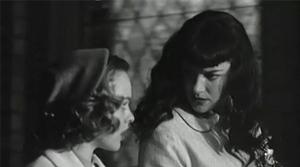
The Notorious Bettie Page (2005)


The Notorious Bettie Page (Mary Harron, 2005)

During Bettie Page's career peak, she has been described as the pin-up queen of the universe. Yet despite the rather crass title she has obtained by posing in several nudist and fetish magazines, the real Bettie Page has remained a virtuous girl; maintaining the upright religiosity of her Southern roots. It's not surprising that a biopic about her would be made. Martin Scorsese originally wanted to make something out of Page's life with Liv Tyler as the famous pin-up model, but that was shelved due to the production of Howard Hughes biopic The Aviator (Martin Scorsese, 2004). Mary Harron subsequently finishes this biopic which I thought was a dull and uninteresting effort, considering that the life of Page is undeniably colorful.

Partly to blame is Harron's aesthetic decision to film majority of the film in black and white with some sequences (mostly those shot in Miami) in color. The flip-flopping from black and white to color is mostly a jarring experience especially when the black and white photography is so beautiful. The initial sequences were shot like a Classic Hollywood pic most probably to emphasize Page's place in pop culture history. Page's career end ushered in the proliferation of smut --- pornography a million times more lewd than Page's reenacted bondage photographs. There's a sense of classiness to the black and white photography, but almost immediately jumbled when Harron decides to film some portions of the film in color. She probably has a reason behind the infrequent switches, but the reason gets lost in style.

Then there's the blunt moral center of the film. Although Bettie Page is assumed to be a devout Christian, Harron seems to be banking on such too much. The film never gets past that angle and is consumed by its own moralistic preaching. It seems that Harron is more interested in the fact that Bettie Page is an uncharacteristic icon because of her differences in profession and belief, rather than the fact that the model is human. The dilemma brewing inside Bettie Page can only be seen in various glimpses --- these glimpses are supplied by Harron whenever she's not busy moralizing and preaching and diving for icons and symbolisms within the story of the model's life.

The Notorious Bettie Page is not entirely a dull experience. Gretchen Mol brings a watchable vitality to Harron's horridly underwritten Bettie Page. Mol's charismatic performance infuses the character the bare humanity it needs to carry on the narrative. As mentioned above, the cinematography is top-notch. The glossy black and white photography supplies the pic with a distinct setting that sufficiently supplants this present era wherein Bettie Page's poses are considered tame. It's actually a nice idea for Harron to use the real footage of one of Bettie Page's films (the film shows a scantily clad Page dancing and wiggling her bottom) as visual aide for the end credits. It's funny how that same film was part of the reason for the model's notoriety and her repeated mentions in the United States senate proceedings against pornography, but is now a part of this film --- a film that fosters a moralistic tone and appropriately ends with Bettie Page preaching verses from the Bible.

Monday, October 23, 2006

Haze (2005)


Haze (Shinya Tsukamoto, 2005)

A man (Shinya Tsukamoto) wakes up in a dark and cramped space. Unable to recall any of the events that preceded his being trapped mysteriously, he starts to make up scenarios to explain his predicament: a war broke out and he has been taken prisoner, a rich man has trapped him as a disgusting fetish. Moments later, he gets dragged (or in my sense, falls) into a spike causing him to bleed profusely; for sure he is not dreaming. After forcing and squeezing himself through the narrow passageways of the torturous maze, he meets another survivor (Kaori Fujii) lying almost lifelessly amidst the visible remains of other human beings. After a desperate chat in which both try to determine what has just happened to them, they try to find their way out of the cruel maze.

Tsukamoto's 50-minute film (I am hesitant to label the film a short film since Tsukamoto's feature films are only ten to twenty minutes longer than this) is definitely an exercise for the director to test his mettle in visceral horror. He begins in absolute claustrophobia. His camera is focused on the sweaty and nervous face of the trapped man. The only sounds audible are those caused by him (tapping; heavy breathing; moans) or mysterious clanging noises from the unknown beyond. Voice overs dictate his psychological standing; a mixture of confusion, desperation, and hopelessness. Truly, the first twenty minutes of Haze is absolutely grating and is an absolute test of your limitations in film viewing. There's not much to see as the film (shot in digital video) is draped in darkness, but what's there to see is an absolute threat to your visual senses. The visual claustrophobia is enunciated by sound effects that further the cinematic torture (most probably enjoyed by those who savored films like Saw (James Wan, 2004) and Hostel (Eli Roth, 2005)).

It seems senseless at first and believe it or not, Haze does work best when it loses you in absolute confusion and induced paranoia. Tsukamoto's cinema is mostly visceral. Despite his being labeled as Japan's Cronenberg, his films doesn't quite reach an extent that surpasses his wild imagery. His later films (A Snake of June (2002), and Vital (2004)) try to encompass his visual energy with depth and narrative sensibility to a certain degree. Haze doesn't quite work when it tries to overcome its visceral side by trying to provide an explanation to the maddening insanity that is depicted. It seems that Tsukamoto is aiming for a metaphor but merely succeeds in compounding the film with conventionality it doesn't need.

Haze, at least after the first twenty minutes that was purely horror, with none of the fatty excesses of gratuitous narrative, goes downhill to art film pretentiousness. It's too bad because I thought Haze could've shown a thing or two how visceral horror films should be done, but instead of treading the road less traveled, makes a U-turn to needless explanation and narrative revelations. It's still worth watching, I suppose. It is after all merely fifty minutes long, and while it lasted, is a heart-pounding, eye-straining, and mind boggling labyrinthine "masturbatory" feat by Japanese auteur Shinya Tsukamoto.

Tuesday, October 03, 2006

Who Killed the Electric Car? (2005)


Who Killed the Electric Car? (Chris Paine, 2005)

Chris Paine's documentary Who Killed the Electric Car? opens with a funeral parade. Several testimonials follow suit, all declaring the good traits of the deceased. It turns out that the deceased is not human at all, but an electric car. The entire funeral parade is in fact part of the program by former electric car owners who are now protesting General Motors' retrieval of the environment-friendly consumer vehicles. The electric car in in truth dead. General Motors, against the rabid campaigning and vigil of activists, has terminated the last few units left, and left some for automobile museums. Paine weeps the unfortunate passing of what could have been a solution to the many problems that surround gas-powered vehicles, and then starts pointing fingers at the likely suspects.

It's a very well-presented documentary of a topic that I think is of important relevance. The first half of the film is told like a clever testimonial to the dead. Paine presents the history of the electric car, avidly describing the fact that these cars have existed alongside fuel-powered ones a century ago. It remains a mystery why the electric cars totally disappeared, only to resurface in a hopeful and probably one of the few bravely political mandates that ever came out of California: the mandate that would slowly phase out fuel-powered cars in favor of electric cars. Paine shows the importance of such, environmentally, economically, health-wise and politically. After telling the story of the rise and fall of the electric car, Paine starts to dissect the details in CSI-fashion and determine who caused the death of the electric car.

The documentary is narrated by a very boring and bored voice of Martin Sheen. Sheen's voice doesn't have the complementary power his visual presence provides and turns the documentary's important messages into a sort of infomercial extravaganza that doesn't quite effectively match up the magnitude of the film. Paine's efforts can be observed. He comes up with several interviews with politicians, ex-employees of General Motors, celebrities (including a bearded Mel Gibson who miraculously doesn't say things that can damage his or the film's reputation), advocates, environmentalists, and an aging inventor and his sweet wife. Paine also shoves up some archived videos from the David Letterman Show (showing a Tom Hanks who is so enamoured by the electric car), a Naked Gun film (which surprisingly and disturbingly accurately describes the reason behind the silent maneuverings to make sure that not a single electric car be driven in the highways of California), and the administrative proceedings that completely toppled the important electric car mandate.

It's a cool and intelligently pieced out feature. There's a sort of sadness by the fact that the only piece of hope or joy the documentary provides is the idea that there are now hybrid plug-in cars in existence or in development (that doesn't really help the cause since electric cars are already an available technology, why spend more cash for something safely in between). It quite feels that the documentary is entirely a lost cause, a mere precaution for what could happen in the future by good-natured technology that may drive huge corporations out of profitable existence. Overall, Paine made a documentary of a story worth telling, and it is told with coherent competence, but above that, there's really not much else. Paine's call for action is not emotional enough to disturb, his documentary not passionate enough to rouse attention.

Monday, October 02, 2006

Wal-Mart: The High Cost of Low Price (2005)


Wal-Mart: The High Cost of Low Price (Robert Greenwald, 2005)

An anti-Wal-Mart protester compares Wal-Mart's dawning on the town of Inglewood, California with Godzilla's destructive invasion of Tokyo. It's not really an accurate metaphor for Wal-Mart's destructive forces. I have a soft spot for the oversized reptile. Godzilla is also a victim despite looking like a heartless monster. Wal-Mart, based on political documentary filmmaker Robert Greenwald, is nothing but a vicious victimizer, descending on little American communities, exciting consumers with its bargain prices bought by a Faustian contract with the demon of greed.

Wal-Mart: The High Cost of Low Price is obviously one-sided. The documentary doesn't give any opportunity for the Wal-Mart management to air their side. I doubt the management will ever give their side, at least not in Greenwald's documentary. Greenwald's allegations, aside from the typical aftereffects, like the closing down of small time shops because of impossible competition, of gargantuan retail corporations landing a pimp spot in any locale, is of immense damaging potential that retaliation from the management would only seem futile and conveniently rehearsed. Actually, Wal-Mart management indeed lends a voice to Greenwald's striking documentary. The film opens with Wal-Mart CEO Lee Scott in an archive footage excitedly wowing a crowd of Wal-Mart associates with opportunities of earning more. The film also contains several of the glossy and equally sleazy inaccurate Wal-Mart commercials Greenwald makes use as a sort of divider to his documentary's many issues, and as a target for stirring yet humorous sarcasm.

Greenwald's attacks range from the obvious to the real eye-openers. Greenwald makes an obvious effort to put a human face on the several businesses that Wal-Mart forcedly closes. It's an emotional touch to an already tired issue that Greenwald seems to be mightily concerned with, and as that, rejuvinates the point with a more humanist rather than an economic concern. Then Greenwald mostly centers on Wal-Mart's deliberate labor abuses, both in America and its foreign factories. Wal-Mart's concern against labor unions and any similar activities is quite distressing --- the way they spend an amount of money for security cameras to detect union activities within their premises, but neglects any security spending for their very own customers; the way they hire multitudes to hinder an impending labor voting. Greenwald tries to connect sexual and racial discrimination in the Wal-Mart workplace with the management's seeming lack of concern for such. It's kind of ill-placed in the documentary but is still nevertheless very telling.

Overall, Wal-Mart: The High Cost of Low Price is compelling stuff. It adds more insult to injury that Greenwald makes use of former employees (even some of those who have spend a quarter of a lifetime working for the retail corporation) who have become disgruntled of Wal-Mart's inhumane ways. Greenwald even makes his way to China and other offshore sweatshops to put a human story to the often told tale of sweatshop workers laboring for a fraction of a dollar per hour. It's amazing research work and Greenwald puts all the stuff together in coherent and scandalizing fashion. With the immense difference between the cost of the products sold and the actual cost for their manufacture, you can't help but wonder what happens to the more than one thousand percent profit being made. Greenwald doesn't let the major culprits get away without being smeared like their unjust corporate vehicle: The Walton Family and its boisterous mouth Lee Scott get majority of the profits to fund their anti-apocalypse bunker and a fleet of jet planes and helicopters.

Monday, September 25, 2006

Ang Pagdadalaga ni Maximo Oliveros (2005)


Ang Pagdadalaga ni Maximo Oliveros (Auraeus Solito, 2005)
English Title: The Blossoming of Maximo Oliveros

A pink orchid is salvaged by twelve year old Maximo Oliveros (Nathal Lopez) from a dirty canal. That delicate act by Maximo opens Auraeus Solito's Ang Pagdadalaga ni Maximo Oliveros (The Blossoming of Maximo Oliveros). Maximo, lovingly referred to by his neighbors as Maxi, is gay. Despite his traditionally unaccepted gender, he is doted by his father (Soliman Cruz) and two older brothers. Maxi's family is engaged in a life of petty crime, ranging from the peddling illegal drugs to snatching cellular phones.

Despite this shady means of livelihood of the Oliveros family, the father keeps a code of discipline that each of the family members should follow: that while it is true that they are thieves, they are not murderers. The father has maintained a reputation within the community, earning the respect of the local police chief who gives him some sort of leeway to conduct his shady activities. Similar to orchid he plucks from the garbage, Maxi is the singly innocent person in that community that thrives in crime and poverty. He relishes in spending nights with his other gay friends, reenacting beauty pageants, or watching movies in the neighborhood DVD shop. One day, while walking alone at night, he is harassed by a couple of neighborhood thugs, only to be rescued by Victor Perez (JR Valentin), an idealistic cop who was just reassigned in the area.

The film is beautiful, carefully addressing the delicate coming-of-age of this atypical gay kid who is living in a world of complete disarray. There are no formal rites of passages, no overly elaborate plot that push him to grow up. Maxi's metaphoric blossoming results from what essentially is an innocent crush that curiously develops into an ambiguous attraction. Maxi's unabashed admiration for the upright policeman slowly changes Victor's officer-like and stoic predisposition, melting into a charming friendship. The friendship causes Maxi to unwittingly shove himself in a tug-of-war where his loyalty to his family is on one side and his immense admiration to the righteous cop on the other.

Solito tells the story in a tender yet assured fashion. There is no notion of exploitation despite the several instances where Maxi's admiration for the cop slowly erupt into a sort of sexual longing. Both humor and innocent romance are at work as Solito quietly puts into music Maxi's almost maternal tending to Victor's needs, especially when Victor falls victim to Maxi's family's rage, rendering the cop disabled for a few days. It's undeniably heartbreaking that despite that Maxi's homosexuality being almost a non-issue in the entire film, poverty, tradition-dictated morality, social and street justice, have impeded his search for true happiness, which at that point, cannot be achieved with relative ease. Maxi's dilemma seems easy as most gays in intolerant societies would imagine the slums area in the film as a Utopian paradise wherein homosexuality is exposed and is ultimately treasured.

Like all coming-of-age stories, Maxi's tale is eventually climaxed by a heartwrenching tragedy that forces that twelve year old to turn into an adult in a matter of days. Michiko Yamamoto's story and screenplay bursts with memorable anecdotes that proves her growth as a screenwriter since her amazing debut in Maryo J. delos Reyes' Magnifico (2003). She blends into the story a side plot of former rivals finally meeting again to rekindle and inevitably end, with fatal results. This side plot culminates in one of the film's most riveting scene, draped in a mixture of urban illumination and shadows by Nap Jamir's admirable digital cinematography, enunciated in the way the policeman and the new sergeant appear from complete darkness. The scene involves the new sergeant (Bodgie Pascua), who turns out to be Maxi's father's former bane. The father initially wanted to negotiate his son's arrest using words at first, then his gun, but upon meeting his equal, succumbs to become the victim of a long-planned vengeance.

Despite its meager roots and with a budget that would be microscopic if compared to Hollywood movies of the same theme, Ang Pagdadalaga ni Maximo Oliveros triumphs with its built-in sincerity and its refreshing emotional depth. The film does not wallow in melodramatics, or cheat itself and turn itself into an angsty and anger-ridden gay film. Instead, the film treads the more difficult path by putting a spotlight on the heartbreaking involuntary puncturing of the innocence of the only person that is pure and beautiful in the dirty slums of that Manila neighborhood. The gay boy we see picking up the flower from the canal in the beginning is completely different from the gay boy we later see walking past a longing policeman, stops, and eventually walks forward. Upon witnessing the events that ensued in his fateful blossoming, one can't help but feel a slight remorse knowing that there's a crack in Maxi's precious innocence. That Maxi has been pushed by a need to grow up faster than his peers.

Sunday, September 24, 2006

Hard Candy (2005)


Hard Candy (David Slade, 2005)

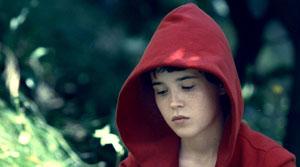
An internet chat conversation opens Brit-born director David Slade's Hard Candy. The two anonymous chatters engage in various flirtatious discussions, leading on to an agreement that they meet in a local dessert place. Hayley (Ellen Page), fourteen-ish dorky looking little girl wearing a red hooded jacket, await her dashing date, Jeff (Patrick Wilson), a thirty-something professional photographer who is both suave and suspicious in his ways. Their initial meeting is pervaded with a feeling that something is not right. It's just not normal that an adult meet up with a teener over an internet chat conversation, and later on, discuss matters ranging from pop music to sexual innuendos.

The setup is awfully familiar. It reminded me (both visually and narrative-ly) of the fairy tale "The Little Red Riding Hood" where the wolf (often used as a metaphor for staling pedophiles) woo the crimson-clad girl to give off her freshly baked goods. The photographer wins the flirting battle and successfully brings home the innocent girl, and further engage in revelatory conversations. The film makes a surprising U-turn when predator becomes prey, and is suddenly victimized with various mental and physical tortures. Hayley unveils herself as a sort of vigilante defender of all those who have been victimized by various sex offenders.

Slade, who previously worked for MTVs and commercials, styles the film with loud colors backdropping the various conversations and acts that constitute the film. It's interesting to look at, and at times, it contributes to the overall emotional direction the film wants to take. Unlike other MTV directors-turned-feature film helmers who seem to have no patience when it comes to editing, Slade seems to have an idea that shots (especially those wherein he plays with colors and backdropping to dramatic effect) shouldn't outrightly be cut after a split second of exposure. Instead, he relishes in his compositions. But like most directors like him, he also have that ailment of using too much jarring camera movements especially in scenes wherein much action is involved. It's a confusing tactic that is unpleasant to the eyes at times.

Hard Candy's most difficult hurdle is that there's not a single character in the film that deserves a bit amount of sympathy. Moreover, the film's rather sensitive topic instantly dictates that sympathies cannot actually be dictated by the film's narrative, unlike let's say, other recent sadistic torture films (Hostel or Wolf Creek) wherein the victims (although ignoramuses and idiots) are all unwilling victims. Here, the victim is someone no one can really root for. In a way, there's a part of you that says that he indeed deserves everything that is done to him (especially the film's centerpiece punishment which most people would actually consider a just retribution to similar crimes). There's a void of pleasant emotions in the film, and in turn, makes the film a very negative and angry piece of work (with little sprinklings of sadistic and sarcastic humor). One might justifiably consider the film outright exploitation of what may seem a universal hatred for pedophilia, and in a way, Slade and writer Brian Nelson do exploit the Oprah Show-fueled anger against sex offenders to imply a sort of justification for the sadism and violence shown and implied onscreen. If it is exploitation, I really don't care much, because it's well-made exploitation.

Monday, September 11, 2006

Sarong Banggi (2005)


Sarong Banggi (Emmanuel dela Cruz, 2005)
English Title: One Night

Emmanuel dela Cruz's first feature film Sarong Banggi derives its title from a Bicolano folk song that one of the characters used to sing to her baby as a lullaby. It's a melancholic song that sets the mood of the film, which partakes of the song in different variations in tempo and rhythm. The film, is by itself, more interesting than profound. It has the quips of Filipino independent cinema that I hope these young directors would eventually drop or outgrow. Other than that, it's pretty harmless. It tries too hard to emulate but falls flat when it suddenly treads on originality. It's not really a successful film, but it deserves much kudos as it was made with an almost non-existent budget and it does include a truly memorable performance by Jacklyn Jose.

Melba (Jacklyn Jose) is an aging prostitute who is hired by a group of friends for Nyoy (Angelo Ilagan), the group's birthday boy and only virgin. When they discover that Melba isn't actually the mid-twenties hottie she described herself to be, they diss her and head out to the nearest bar to catch younger girls for the birthday boy. Nyoy who seems to have something more in his mind, wanders from the bar and back to Melba. Melba and Nyoy develop a bond that we later discover, is something more than friendship.

It is quite obvious that dela Cruz's influence is Wong Kar Wai. Benefitting from Mayor Lito Atienza's lighting up campaign of the infamous Roxas Boulevard, dela Cruz was able to film as much colorful neon lights to serve as backdrop to his tale. Dela Cruz also frequently uses slow motion and mirror images (which reminds me very much of In the Mood for Love). Again, it's not entirely successful. Dela Cruz is bound by the limitations of digital filmmaking and at times, his Doyle-emulating techniques looks more messy than beautiful.

The tremendous shifts in visual tone jar what could've been a point of heightened emotion. The slow motion sequences look really terrible and I thought dela Cruz could've done without these techniques. Music plays an important role in the film. There are beautiful moments where music and the incongruent visuals match up in a delightful marriage but these moments seem off-place. Dela Cruz derives excitement from making use of the title song and its many versions that it's quite offputting.

There's one wonderful scene in the film though that I thought was enough to consider the film not entirely unsuccessful. Ala Wong Kar Wai, dela Cruz's characters speak up their mind in witty yet in-character narration. Melba, while waiting for the group of kids who hired her services, try to entertain herself by creating stories out of the people walking by her. It's a lovely device, I thought. It opened up Melba's character more than the implausible machinations dela Cruz would have the character suffer through later in the film (I really disliked the illogical twist which I thought ruined the serviceable first half of the film). It showed Melba as a woman who has ripened enough to be confident of the woes and facades of life, that she is able to render judgment and stories of people just by looking at their faces and their actions. Sadly, when Melba and Nyoy meet up and discuss, Melba asks Nyoy to do the same. Nyoy does a fantastic job in making up a story about a man dressed formally and Melba says th Nyoy that he might be a writer someday, like Ricky Lee, one of the most successful Filipino screenwriters. I suddenly remember my screen writing class under Ricky Lee where he taught the technique of making up stories out of the ordinary people we see everyday. I suddenly had a notion that Sarong Banggi is a complete product of that exact exercise taught by Lee. Dela Cruz seeing a seductively dressed yet middle aged woman sitting next to a normal and naive looking teenager, and cooks up this wildly imaginative tale on how those two met, and the bunch of links they may have with each other. Wong Kar Wai, Doyle, Ricky Lee, twist plot developments, not really original, I thought.